
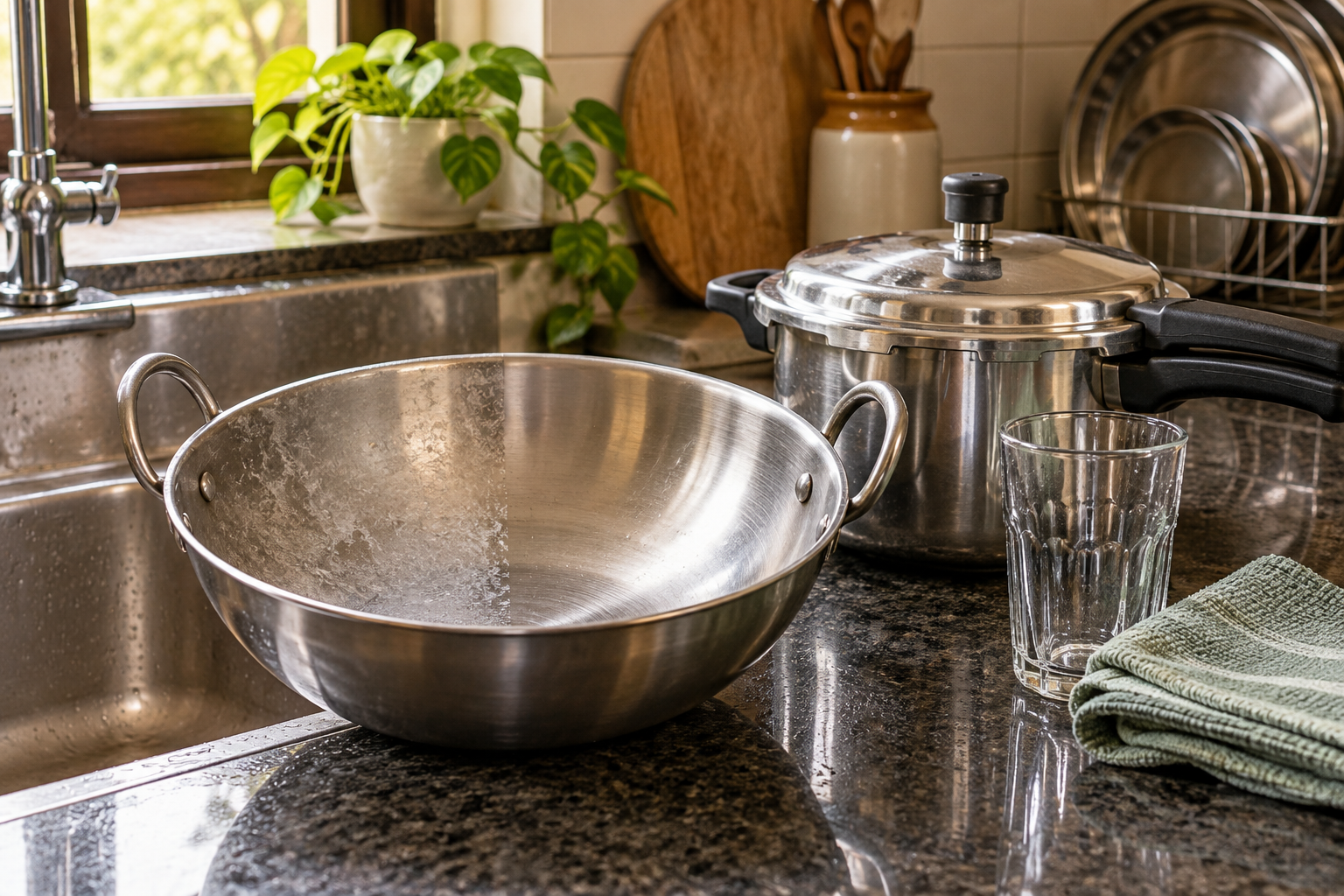
You wash a pressure cooker or kadai, rinse it carefully and still notice a white powdery film after it dries. It is frustrating, especially when the utensil looked clean at the sink. The residue is not necessarily a “chemical layer” left by dish soap. Several causes can look similar, and appearance alone cannot identify which one is responsible.
Understanding the possibilities helps you avoid wasting product or using a harsh remedy that may damage cookware. Water quality, metal type, food deposits, the amount of detergent and the rinsing method can all make a difference.
What may be causing the white layer?
Hard water contains dissolved minerals. When water evaporates, some minerals can remain as pale spots or a chalky film. This can happen on cookware, taps and glassware. Aluminium can also develop whitish marks as its surface changes, while food residue or excess cleaner may leave a film. [1, 2]
The material matters. Aluminium, stainless steel, cast iron, non-stick coatings and pressure-cooker components each have different care requirements. A remedy suitable for one utensil may damage another. Do not assume that white residue proves your dishwashing liquid is faulty, and do not assume that it is harmless without understanding the source.
Improve the washing routine
Allow hot cookware to cool before washing, following the manufacturer’s instructions. Remove loose food and wipe out excess oil where practical. Use the recommended amount of dishwashing liquid rather than pouring freely. Too much product can make rinsing more difficult and wastes money without necessarily improving cleaning.
Wash with a sponge or brush suitable for the utensil’s finish. Avoid metal scouring pads on non-stick coatings and other delicate surfaces. For aluminium or polished cookware, check the maker’s guidance before using abrasive tools or strong chemicals.
Rinse every surface thoroughly with clean running water. Pay attention to handles, lids, rims, pressure-cooker grooves and areas around fittings where residue can remain. If your water is hard, drying the utensil with a clean cloth rather than allowing droplets to evaporate may help reduce mineral spots.
If the film returns despite careful washing and rinsing, consider whether your water is hard or whether the cookware material itself is changing. Check the manufacturer’s care instructions before attempting to remove mineral deposits. Avoid automatically using vinegar, acids, bleach or abrasive powders inside every pot; compatibility depends on the metal, coating and intended use.
Why more dish soap is not the answer
Dishwashing liquid helps loosen and disperse grease so it can be removed during washing and rinsing. It is not designed to make every mineral deposit disappear. Increasing the dose may leave more product to rinse away, while the actual problem—such as hard-water minerals or a change in aluminium—remains.
A useful test is to adjust one part of the routine at a time. Use the labelled dose, rinse thoroughly and dry with a clean cloth. If the residue persists, inspect the cookware instructions and water conditions instead of repeatedly changing detergent or scrubbing harder.
Where LOCI fits
LOCI Dishwash Liquid is designed for everyday manual dishwashing, helping remove food residue and grease from plates, glasses, cookware and utensils. Using the right amount of product and allowing it a little time to work can make cleaning stubborn, greasy dishes easier.
For normally soiled dishes, use 1–2 pumps of LOCI Dishwash Liquid. For heavily soiled or greasy cookware, use 2–3 pumps. If food residue is particularly stubborn, soak the utensils in water with the dishwash liquid and leave them for about a minute before washing. This gives the enzymes time to work on the types of food residue they are formulated to break down, helping make the residue easier to remove.
Wash with a suitable sponge, paying attention to areas where grease and food residue tend to accumulate, such as the base and sides of a pressure cooker or the inner surface of a kadai. Rinse thoroughly with clean water and follow the cookware manufacturer’s care instructions, especially for non-stick coatings and delicate finishes.
White marks on pressure cookers and kadais can have different causes, including mineral deposits from hard water, detergent residue or changes to the surface itself. They should not automatically be attributed to dishwashing liquid alone. Using the recommended amount, washing thoroughly and rinsing well are good starting points for a cleaner finish.
The LOCI approach is simple: use 1–2 pumps for everyday washing and 2–3 pumps for tougher grease, allow stubborn residue a short soak when needed, and rinse thoroughly. A thoughtful dishwashing routine combines the right amount of product with enough time and proper rinsing—not simply more detergent.
Frequently asked questions
Is white residue always dish soap? No. Hard-water minerals, cookware material changes and food deposits can look similar.
Should I use vinegar to remove it? Not automatically. Acids may be unsuitable for some metals, coatings and cookware. Follow the maker’s instructions.
Can I use more dishwashing liquid? Use the labelled amount. Extra product can make rinsing harder and may not address mineral deposits.
The takeaway: Treat a recurring white layer as a clue. Check the water, material, dose and rinse before blaming the detergent or reaching for a harsher cleaner.