
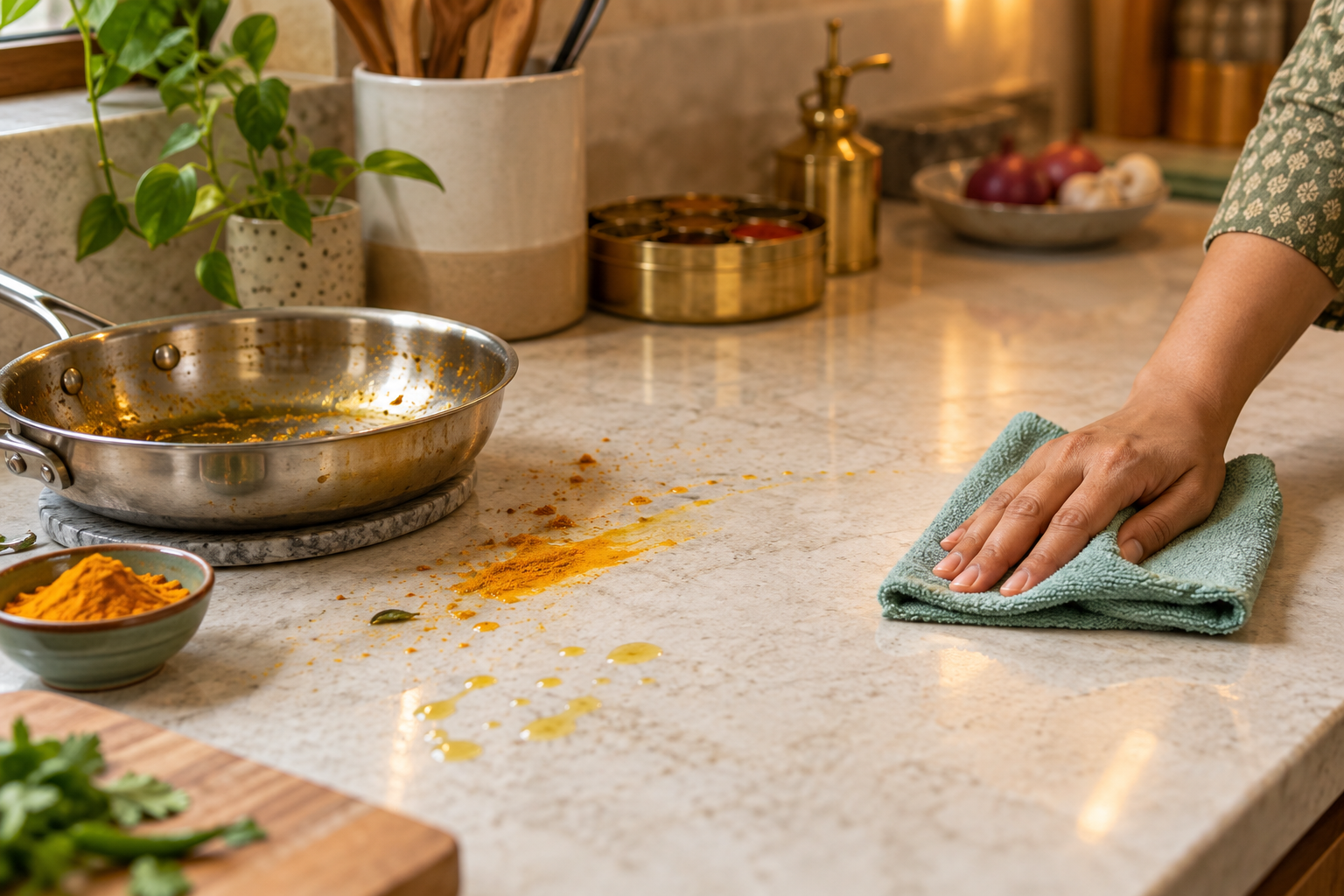
Deal with turmeric pigment and cooking-oil splashes without scratching or spreading the stain.
Turmeric, chilli, oil and tadka splashes are familiar sights on Indian kitchen counters. These marks can be stubborn because a stain may contain both coloured pigment and oily residue. The right response depends on the countertop material: sealed granite, engineered quartz, marble, laminate and unsealed stone do not all tolerate the same cleaners or stain-removal methods.
The first rule is to act early rather than scrub aggressively. Abrasive powders and scouring pads can scratch delicate finishes, while strongly acidic or alkaline cleaners may damage certain materials.
LOCI Kitchen Surface Cleaner combines plant-based surfactants with enzymes to tackle everyday kitchen mess. The surfactants help loosen grease and lift grime, while the enzymes help break down food residues, making them easier to wipe away. This complementary cleaning approach is designed to deliver effective everyday cleaning without relying on aggressive scrubbing.
Practical steps
Lift excess oil. Use a paper towel or a clean absorbent cloth to blot a fresh oil spill. Press and lift rather than rubbing it sideways. This removes some of the oil before it spreads and carries turmeric pigment across the counter.
Remove loose spice. Gently lift dry turmeric or chilli powder with a soft brush or dry cloth before applying LOCI Kitchen Surface Cleaner. Avoid rubbing the dry particles into the surface, as this can spread the stain and make it harder to remove.
Check the material. LOCI Kitchen Surface Cleaner is suitable for granite, quartz, tiles, laminate and other hard surfaces, provided they are properly sealed and compatible with the product. Use a clean, soft cloth to wipe the surface and follow the manufacturer’s care instructions. Avoid vinegar, lemon juice and other acidic cleaners on marble and acid-sensitive stone, as they can damage the finish.
Apply LOCI Kitchen Surface Cleaner. Follow the directions on the product label. Spray the cleaner onto the surface or a clean, soft cloth, depending on the material and the area being cleaned. For delicate surfaces, seams or areas near electrical fittings, apply it to the cloth first. Allow the recommended contact time, and do not let the product dry on the surface unless the label instructs otherwise.
Wipe and inspect. Use a soft microfiber cloth to lift away loosened grease, food residue and grime. Turn the cloth to a clean section as the dirt transfers. If the product directions recommend it, wipe again with a clean, damp cloth, then dry the surface with a soft cloth to leave it clean and streak-free.
Repeat gently if needed. Stubborn stains or residue left for several hours may require another application of LOCI Kitchen Surface Cleaner. Repeat the recommended cleaning process rather than increasing the product concentration or using abrasive powders and rough scrubbers, which can damage the surface finish.
Tips and tricks
Keep a counter cloth close to the stove: A quick wipe after cooking is easier than removing a film that has collected dust and hardened over several days.
Use a splash guard where practical: A guard behind the hob can reduce the amount of oil reaching adjacent counters and glass.
Lift, do not smear:For oily stains, blot first and clean second. Rubbing immediately often enlarges the mark.
Protect porous materials:Use boards and trays for spice containers and oil bottles. Check the sealant on natural stone according to the supplier’s care schedule.
Do not improvise a bleach treatment: Bleach can discolour some materials and may react dangerously if mixed with other cleaners. Never mix it with acids or ammonia-containing products.
Keep food away during cleaning: Move ingredients, cutting boards and utensils away from the area. Clean the surface as directed before using it for food preparation again.
When a stain remains
A yellow mark may be a surface stain, but it may also have penetrated a porous stone or altered the finish. If a countertop turns dull after cleaning, that may be etching or abrasion rather than leftover turmeric. More detergent will not repair surface damage. Ask the countertop manufacturer or a stone-care specialist for advice on persistent stains or changes in sheen.
The practical formula is simple: blot oil, remove dry spice, use a compatible cleaner, wipe with a soft cloth and reassess before repeating..
For coloured stone. Pigmented stains can be harder to remove from porous or unsealed surfaces. Avoid trying several home remedies in succession; each can change the stain or damage the finish.
For engineered quartz. Follow the manufacturer’s instructions because resin binders and finishes can respond differently from natural stone. Do not use abrasive powders or high-heat tools unless explicitly allowed.
For routine prevention. Keep oil bottles on a washable tray and wipe spice containers before returning them to the shelf. Small habits reduce the number of spills that reach the countertop.
Keep the cleaning area organised, use a fresh cloth when the current one is visibly dirty, and put products away as soon as the task is complete.