
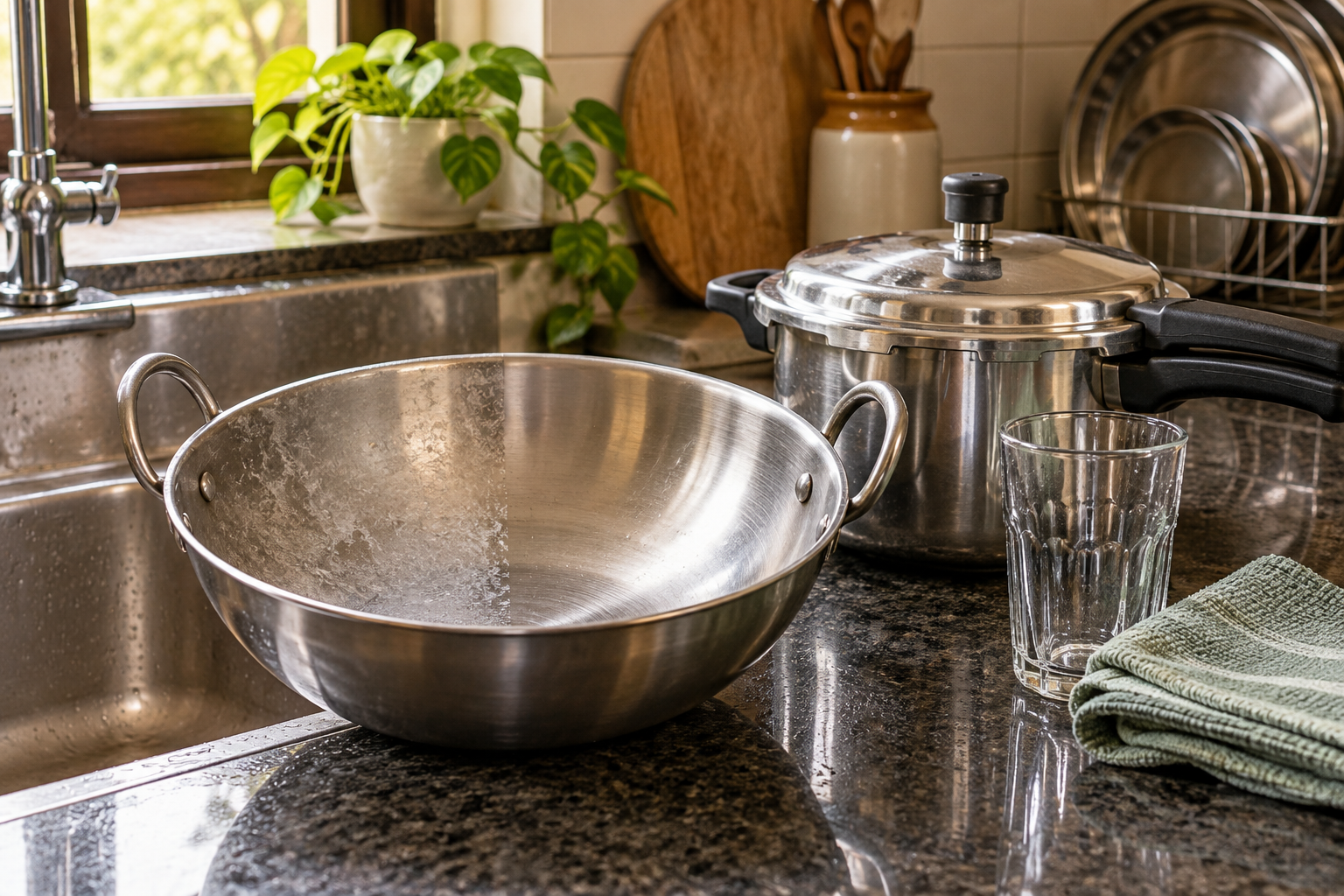
Work out whether a pale film is mineral deposit, food residue or detergent left behind.
A white or cloudy film on stainless-steel kadais, pressure cookers and glasses can be frustrating, especially after a utensil looks clean while wet and turns hazy as it dries. But the film does not always come from dishwashing liquid. Hard-water minerals, starch, detergent residue and heat-related deposits can all leave marks. The best way to solve the problem is to identify the likely cause rather than assume one product ingredient is responsible.
Dishwashing liquid removes grease and food soil, but it does not necessarily remove mineral scale. LOCI Dishwash Liquid 2 pumps are sufficient for soiled dishes and for tough stain use 3-4 pumps.
Practical steps
Empty and pre-rinse. Scrape leftover food into the bin and rinse away loose rice, dal, sauce or oil. This reduces the amount of soil the sponge must carry and helps the cleaner reach the remaining film.
Use 1-2 pumps of LOCI Dishwash liquid to a damp sponge or follow the product directions. Too much detergent can make rinsing harder, while too little may not remove heavy grease. Avoid adding extra product simply to produce more foam.
Wash methodically. Clean the inside, outside, handles, rims and around rivets. Grease can collect in seams and under handles. Use a non-abrasive sponge on polished stainless steel and follow the cookware maker’s instructions for aluminium, non-stick coatings and other finishes.
Rinse thoroughly. Use clean running water or a basin of fresh rinse water, changing it when it becomes cloudy or soapy. Check the rim, base and handle joins. Do not rely only on a “squeaky” feeling; surface feel is not a reliable test that all detergent has been removed.
Dry and inspect. Use a clean drying rack or towel. If the pale marks appear only after drying, note whether they are chalky, greasy or rainbow-coloured. Their appearance can help narrow down the cause.
Diagnose the film
Chalky white spots on glass or metal: Hard-water minerals are a common cause. A suitable descaling method may be needed, but check the cookware material first. Do not use acids on aluminium, marble or any surface whose manufacturer prohibits them.
Slippery or foamy patches:** Rinse again with fresh water. Check that you have not used too much dishwash liquid.
Greasy haze: Wash again with an appropriate amount of dishwash liquid and a clean sponge, paying attention to the edges and handles.
Rainbow tint on stainless steel: Heat-related oxide films can create coloured patterns. Follow the cookware manufacturer’s cleaning guidance instead of using abrasive pads.
White marks on aluminium:Aluminium can react with certain products and water conditions. Avoid strong acids, strong alkalis and abrasive cleaners unless the manufacturer specifically approves them.
Tips for better dishwashing
Keep the sponge clean. Rinse it after washing and allow it to dry between uses. Replace it when it smells, falls apart or stays visibly dirty.
Wash from less greasy to greasier.Glasses and lightly soiled plates can be washed before heavily oily kadais, helping the wash water last longer.
Soak stuck food, not every utensil. Add warm water to a cooled pot and let residue soften before washing. Do not pour cold water into very hot cookware; sudden temperature changes can damage some items.
Avoid steel wool on delicate finishes. It can scratch stainless steel and damage non-stick coatings. Use a tool appropriate for the material.
Do not mix cleaning products. Never combine dishwash liquid with bleach, toilet cleaner or other chemicals in an attempt to remove a film.
If the film keeps returning, consider whether your water is hard and whether the utensil is fully rinsed. A detergent may remove grease effectively while mineral deposits remain. Correctly identifying the residue is more useful than blaming every white mark on “chemical fillers” or promising a spotless shine after a single rinse.
Check glassware separately. If glasses also develop white spots, hard water may be involved. That does not prove that the dishwash liquid caused the film. Use a cleaning or descaling method compatible with the glass and follow the appliance or manufacturer guidance.
Use clean rinse water. In a basin, replace rinse water once it becomes visibly soapy. If rinsing under a tap, use a controlled flow and avoid leaving the water running while scrubbing.
Store utensils dry. Allow water to drain fully and keep clean cookware away from a dirty sink or sponge. A clean drying area prevents recontamination after washing.