
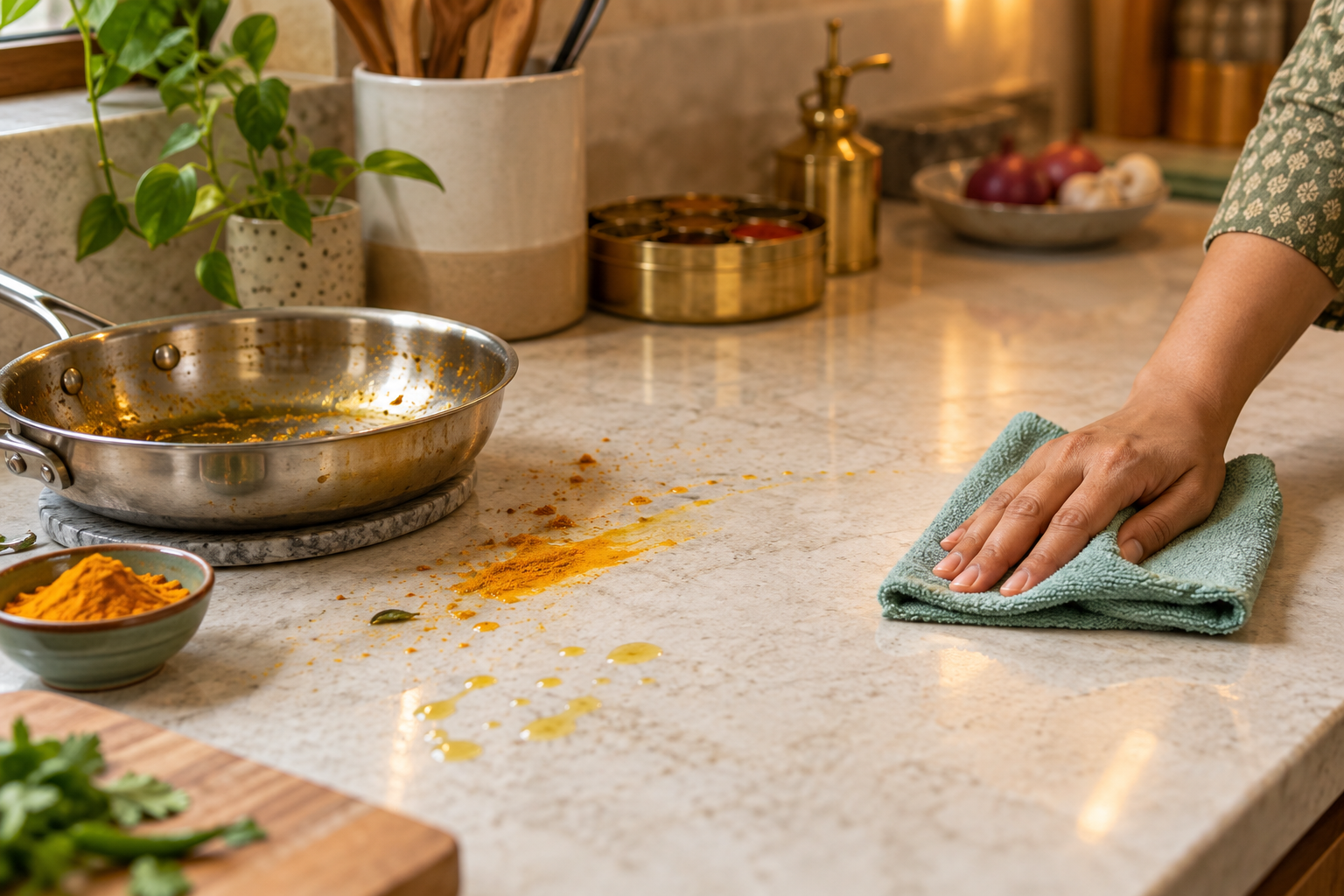
A splash of chai near the stove, a ring left by coffee, oil spatters after tadka, a smear of haldi on the worktop or milk boiling over at the wrong moment: Indian kitchens produce a wide variety of everyday messes. Some disappear with a quick wipe. Others leave a sticky film, coloured mark or dried residue that seems to return even after cleaning.
That is because “kitchen dirt” is not one thing. Food spills contain different combinations of fats, proteins, sugars, pigments and particles. Water may lift a fresh splash, but it will not always remove grease or dried-on residue.
A better routine begins by identifying the mess, removing the excess and choosing a cleaning method compatible with the surface.
Turmeric: colour that needs quick attention
Turmeric gives dal, sabzi and curry their golden colour. Its pigment, curcumin, has limited solubility in water at room temperature, which helps explain why a yellow mark may not disappear with one quick wipe. [1]
Lift away food or paste with a soft cloth, taking care not to spread it. Clean the remaining residue with a product approved for that counter material. Wipe again with clean water if the product instructions require it, then dry. If the mark remains, do not immediately reach for bleach, vinegar, lemon juice or a rough scrubber. These can affect certain finishes and may make the problem worse.
Tadka and cooking oil: the slippery film
Oil spatters around the hob, backsplash and nearby cabinets. A wet cloth alone can spread the film because oil does not mix readily with water. Blot or lift excess oil first, then use a compatible kitchen surface cleaner or detergent. Work in small sections and wipe with a clean cloth. Follow the label for contact time, rinsing and drying.
For built-up grease, repeat a gentle cleaning cycle rather than scrubbing harder or combining products. Natural stone needs special attention: check the surface manufacturer’s advice before applying a general-purpose cleaner.
Milk: a spill that dries into residue
Milk contains water, fat, proteins and sugars. When it dries, these components can leave a film around a vessel, on a counter edge or beneath an appliance. Wipe the spill promptly, paying attention to seams and edges. Clean with a compatible mild detergent or surface cleaner, then remove residue as directed and dry the area. Wash the cloth before using it elsewhere.
If milk reaches unfinished wood, porous material or a gap, a simple surface wipe may not be enough. Follow the material-specific care instructions rather than soaking the area.
Tea and coffee: rings, splashes and sugar
Chai and coffee are everyday rituals, so small spills are easy to overlook. Tea and coffee can leave coloured marks, especially when combined with milk and sugar or allowed to dry. Blot fresh spills, clean with a suitable product and dry the surface. For cups and utensils, use dishwashing liquid intended for dishes and rinse thoroughly.
Do not use a fabric stain remedy on a countertop unless it is confirmed as suitable for that material. Glass, laminate, engineered stone and natural stone can have different care requirements.
Curry and masala: several kinds of mess at once
Curry may contain oil, turmeric, tomato, dairy, ground spices and solid food. Remove the solids with a spoon or soft tool that will not scratch the counter. Blot the liquid or oily residue, then clean with a compatible product. Wipe with a clean cloth and rinse if the label calls for it.
If curry spills on marble or another acid-sensitive stone, avoid acidic home remedies such as lemon or vinegar. If a mark remains, check the surface maker’s care guidance before trying another method.
Burnt-on food needs patience
Overflowing milk, dried dal or food baked onto a hob can become harder to remove with time. Allow the appliance to cool according to its manufacturer’s instructions. Remove loose debris with a tool approved for that surface, then use the recommended cleaner. Avoid scraping glass, enamel or non-stick coatings with a blade or metal pad unless the manufacturer specifically permits it. Never spray liquid into electrical components, burner openings or a hot appliance.
A simple routine for most kitchen messes
First, remove excess food or liquid. Second, identify whether the residue is oily, coloured, sticky, milky or burnt. Third, choose a cleaner that is compatible with the surface. Fourth, wipe with a clean cloth so loosened dirt is not spread back around. Finally, rinse and dry when required by the product label.
Never mix cleaning products. Keep concentrated cleaners away from food and utensils, and keep children away while cleaning. Cleaning removes soil; sanitising or disinfecting is a separate step and should be done only when appropriate, with a product approved for the intended use. [2, 3]
Where LOCI fits in your kitchen
The kitchen sees a different kind of mess every day—from oil splashes near the stove and masala stains on the backsplash to grease on countertops and fingerprints on appliance exteriors. Regular cleaning helps prevent this everyday grime from building up.
LOCI Kitchen Surface Cleaner is designed to tackle tough kitchen messes with plant-powered and enzyme-powered cleaning. It can be used on suitable surfaces such as countertops, stovetops and hobs, kitchen backsplashes, sinks and fixtures, appliance exteriors, cabinets and laminates. To clean, turn the nozzle to the ON position, spray directly onto the surface and wipe with a clean, dry or damp cloth.sils, u
For best results, address spills and splatters promptly rather than allowing them to accumulate. Use a clean cloth to avoid spreading grease from one area to another, and pay extra attention to frequently used areas around the stove and food-preparation counter.
For plates, glasses, cookware and utensils, use LOCI Dishwash Liquid instead. Wash these items thoroughly and rinse well with water before use. While LOCI Kitchen Surface Cleaner is intended for cleaning kitchen surfaces, LOCI Dishwash Liquid is designed for washing everyday dishes and utensils. Choosing the right product for each task helps make your kitchen cleaning routine more effective and straightforward.
The LOCI approach is simple: use the right product for the right job, follow the recommended directions and clean regularly. Using more cleaner than necessary isn’t the goal; consistent, thoughtful cleaning is.
Frequently asked questions
Why is turmeric difficult to remove?Turmeric contains a strong yellow pigment that does not dissolve readily in water alone. Wipe up spills promptly and use a suitable kitchen surface cleaner to help remove stains before they set.
How do I remove oil from a counter?First, blot excess oil with a paper towel or clean cloth. Then spray LOCI Kitchen Surface Cleaner onto the surface and wipe with a clean, dry or damp cloth to lift grease and residue.
Can I use the same product on counters and dishes?LOCI Kitchen Surface Cleaner is designed for kitchen surfaces, including countertops, stovetops and backsplashes. For plates, glasses, cookware and utensils, use LOCI Dishwash Liquid instead. Each product is formulated for a different cleaning task.
The takeaway: Know the mess before you clean it. Prompt action, the right product and the correct cleaning method can make everyday kitchen messes easier to manage without unnecessary scrubbing or excessive product use.