
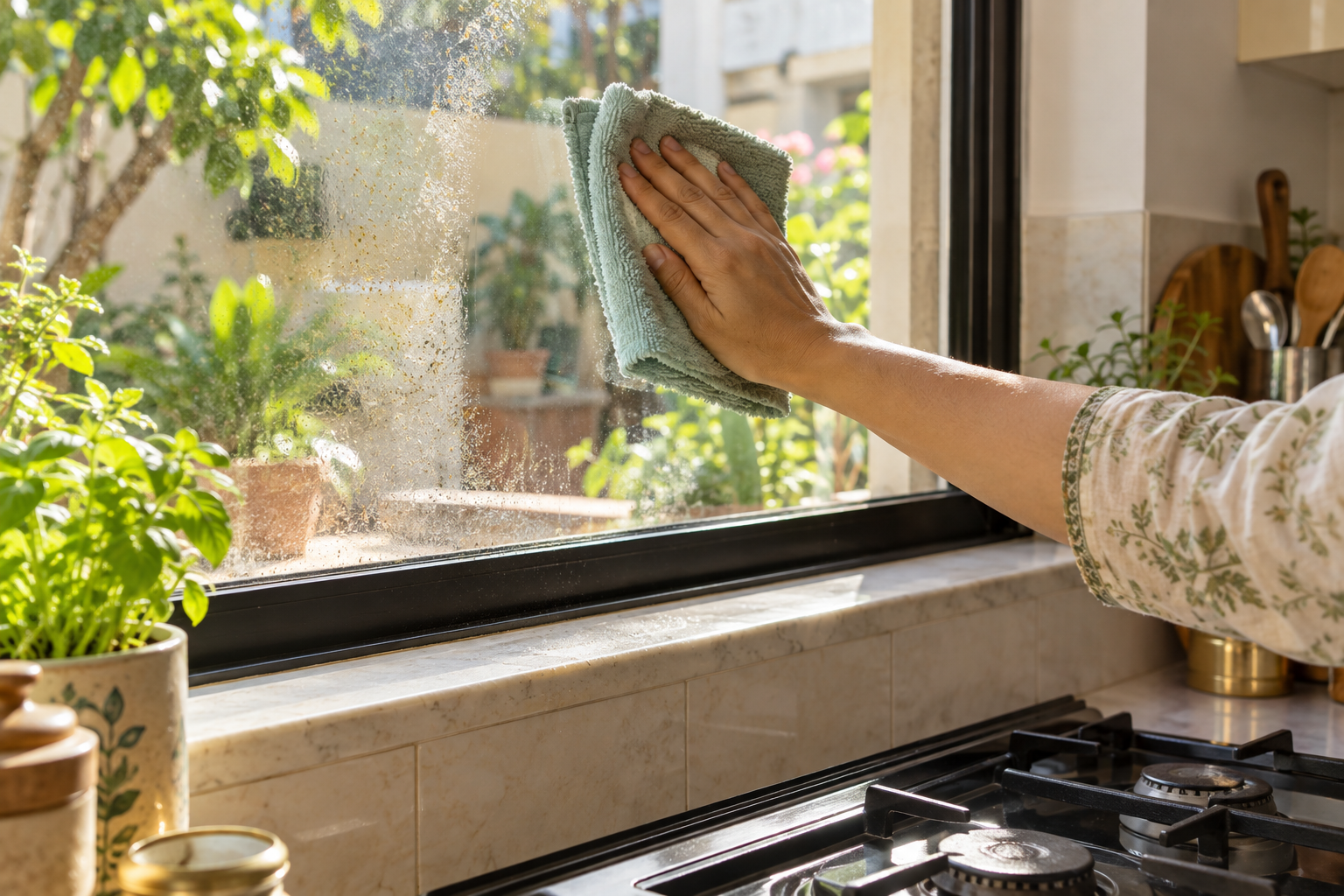
Remove the oily haze that gathers on kitchen windows and cabinet glass near the hob.
Frying and tadka release fine droplets of oil that can settle on nearby windows, cabinet doors and glass panels. Dust then sticks to the oily layer, making the glass look cloudy and causing a cloth to drag rather than glide. The key is to remove loose dust first, loosen the grease with a suitable cleaner and finish with a clean, dry cloth.
Not every glass surface is the same. Window glass, tinted panels, coated glass, mirrors and glass near a hob may have different restrictions. Check the manufacturer’s instructions for the surface and for LOCI Glass Cleaner before use. Do not assume that an ammonia-free formula is automatically suitable for every coating or that any spray can remove heavy grease instantly.
Practical steps
Make the area safe. Turn off the nearby hob and allow it to cool completely before cleaning. Move food and utensils away from the area. If you’re cleaning a window above a counter, make sure you can reach it safely without leaning over the stove.
Remove loose dust. Gently wipe the glass with a dry microfiber cloth to collect loose particles before applying cleaner. This helps prevent dust and grit from spreading across the surface. If the glass has a thick layer of greasy dust, lift off as much as possible without pressing hard.
Apply LOCI Glass Cleaner sparingly. Start with 1–2 sprays, adjusting as needed for the size of the area and the level of grime. Avoid soaking the frame or allowing liquid to run into seals, hinges or electrical components. For coated or tinted glass, test a small, inconspicuous area first and follow the manufacturer’s care instructions.
Loosen stubborn grease. For older or heavier grease, allow the cleaner to work as directed on the product label. If residue remains, make a second pass rather than applying too much product at once.
Wipe with a clean cloth. Fold a microfiber cloth into quarters and use one section to lift the loosened grime. Turn to a clean section as it becomes dirty, working from top to bottom in overlapping strokes. Avoid using crumpled newspaper on delicate or specially coated glass unless the glass manufacturer recommends it.
Buff dry. Use a second, dry microfiber cloth to remove remaining moisture and help minimise streaks. Inspect the glass from different angles and repeat the wipe if needed.
Tips for a clearer finish
Clean regularly: A light film is easier to remove than grease that has accumulated over weeks. Wipe nearby glass during routine kitchen maintenance.
Use the exhaust fan: Ventilation while cooking can reduce the amount of airborne grease settling on windows and cabinets. Clean the filter according to the appliance manual.
Use separate cloths for grease and buffing: A saturated cloth spreads oil and creates streaks. Keep a clean, dry finishing cloth ready.
Avoid rough scrubbers: Steel wool, abrasive pads and gritty powders can scratch glass coatings or frames.
Do not spray near flame or hot surfaces: Let the hob cool and follow all product warnings. Never mix glass cleaner with bleach or another household chemical.
Do not substitute newspaper automatically: Some printing inks or paper fibres can leave marks. A clean microfiber cloth is the more predictable option.
Common mistakes
Common Mistakes to Avoid
Using too much cleaner can leave streaks instead of delivering a better result. Wiping the entire pane with a dirty cloth can spread loosened grease back across the glass. Cleaning glass in direct, hot sunlight may also cause the product to dry too quickly, leaving marks behind.
Some glass cleaners contain ammonia, while others use different formulations. LOCI Glass Cleaner is ammonia-free, making it an option for those who prefer to avoid ammonia-based products.
For a streak-free finish, remove loose dust first, use LOCI Glass Cleaner as directed, switch to a clean section of microfiber cloth as it picks up grime, and buff the glass with a dry cloth. The right technique matters more than a strong fragrance or excessive spraying.
Don’t overlook the frame. Dust and greasy fingerprints can collect on window frames, rubber seals and surrounding surfaces. LOCI Glass Cleaner has been tested on these materials, so you can include them in your cleaning routine, following the recommended directions for use.
For persistent greasy haze, use a fresh microfiber cloth and repeat the cleaning process if needed. Avoid scraping the glass with a razor or metal tool unless the glass manufacturer explicitly permits it, as scraping can damage the surface or its coating.