
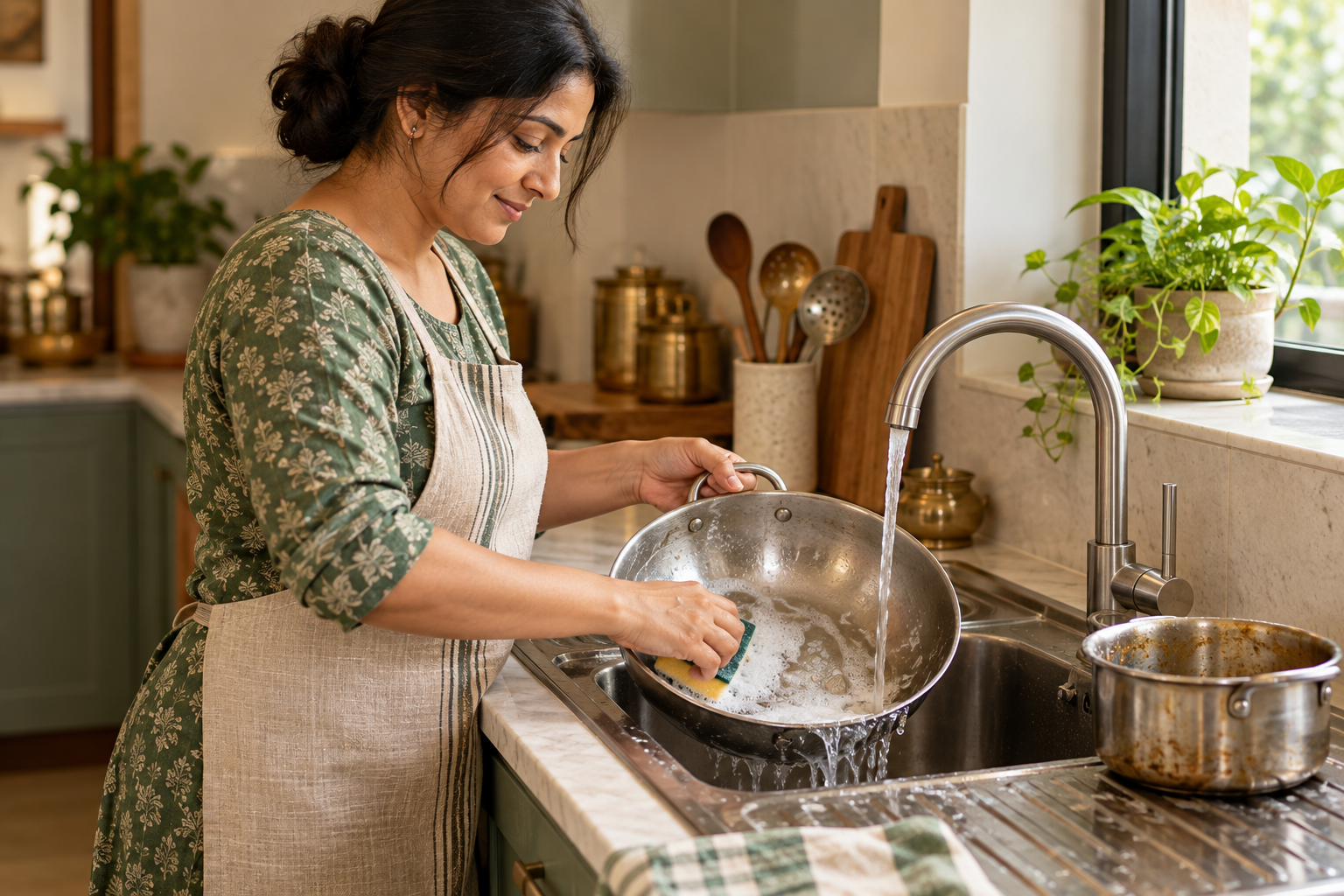
Remove ghee, tadka oil and gravy residue with less scrubbing and less wasted water.
Rich Indian cooking often leaves pots, pans and serving bowls coated with ghee, oil and thick gravy. Trying to wash everything immediately with cold water can make solidified fat harder to move, while aggressive scrubbing can scratch cookware or damage non-stick coatings. A short soak, a suitable dishwashing liquid and a clean sponge usually make the task easier.
Plant-derived ingredients can be part of an effective cleaning formula.Use LOCI Dishwash Liquid 1-2 pumps, and wear gloves if your hands become dry or irritated during dishwashing.
Practical steps
Remove excess fat. Let hot cookware cool to a safe handling temperature. Wipe pooled ghee or oil into a disposable towel or collect it in a container for appropriate disposal. Do not pour large quantities of fat down the sink; it can solidify in plumbing.
Soften stuck-on residue. Add warm water to the cooled pot and let it stand for a few minutes. For dried gravy, use a suitable soak rather than scraping with a knife. Avoid thermal shock: do not add cold water to very hot cookware.
Apply dishwash liquid. Apply 1-2 pumps of LOCI Dishwash Liquid and work it into a damp sponge and clean a small section first. For heavy grease, allow the soapy sponge to contact the oily surface while you work, but do not assume a dry sponge or concentrated detergent is always the best method.
Wash from the edges inward. Clean the rim, handles, rivets and underside where grease gathers. Use a non-abrasive sponge on stainless steel and follow the manufacturer’s care instructions for cast iron, aluminium, copper and non-stick surfaces.
Rinse in clean water. Rinse until no visible foam or greasy film remains. If the rinse water becomes oily, replace it rather than spreading grease back over the utensil. Inspect the base and handles, then place the item on a clean drying rack.
Deal with burnt-on food separately. For stubborn residue, soak with warm water and use a utensil-safe scraper or brush. Do not use a sharp metal tool on non-stick coatings. Follow the cookware maker’s directions for baked-on stains.
Tips that save time
Wipe before washing: Removing excess ghee with a paper towel can reduce greasy wastewater and make the sponge last longer.
Wash in batches: Start with glasses and lightly soiled plates, then move to greasy cookware. Change the wash water if it becomes heavily contaminated.
Use the right tool: A soft sponge is suitable for many surfaces; a nylon brush may help with robust stainless steel. Non-stick coatings need a gentler approach.
Keep drain strainers in place: Catch food scraps before they enter the plumbing. Wipe fat into the bin rather than rinsing it away.
Avoid the “squeak test: A squeaky surface is not a reliable measure of cleanliness and can be affected by the material and water. Check for visible grease and rinse thoroughly instead.
Protect your hands: Frequent exposure to water and detergent can dry skin. Gloves may help; stop using a product if it causes irritation and follow its caution statements.
What not to do
Do not claim that a dishwash liquid protects everyone’s skin or guarantees soft hands. Do not mix detergent with bleach or other cleaners. Never use a product on food-contact cookware in a way that contradicts its label. If a pot has a damaged coating, corrosion or a persistent chemical odour, consult the manufacturer rather than trying stronger chemicals.
For everyday ghee and oil, the most effective routine is to remove excess fat, soften the residue, use a measured dose, scrub with a suitable tool and rinse with clean water. This approach reduces effort without making unrealistic promises about performance or skin benefits.
For pressure cookers. Pay attention to the lid, gasket and valve. Follow the cooker manufacturer’s cleaning instructions and never immerse parts that should not be submerged. Reassemble only when parts are clean and dry.
For cast iron or seasoned cookware. Use the care method recommended by the manufacturer; prolonged soaking or aggressive detergent use may not suit every seasoning system.
For burnt-on food. A longer warm-water soak and a suitable non-scratch scraper may work better than extra detergent. If a coating is flaking or damaged, stop using abrasive methods.
A final practical check is to read the label before each new use, especially when the surface, stain or task changes. Follow the manufacturer’s directions over any general online tip.