How to clean floors thoughtfully when little hands, toys and play mats are close to the ground.
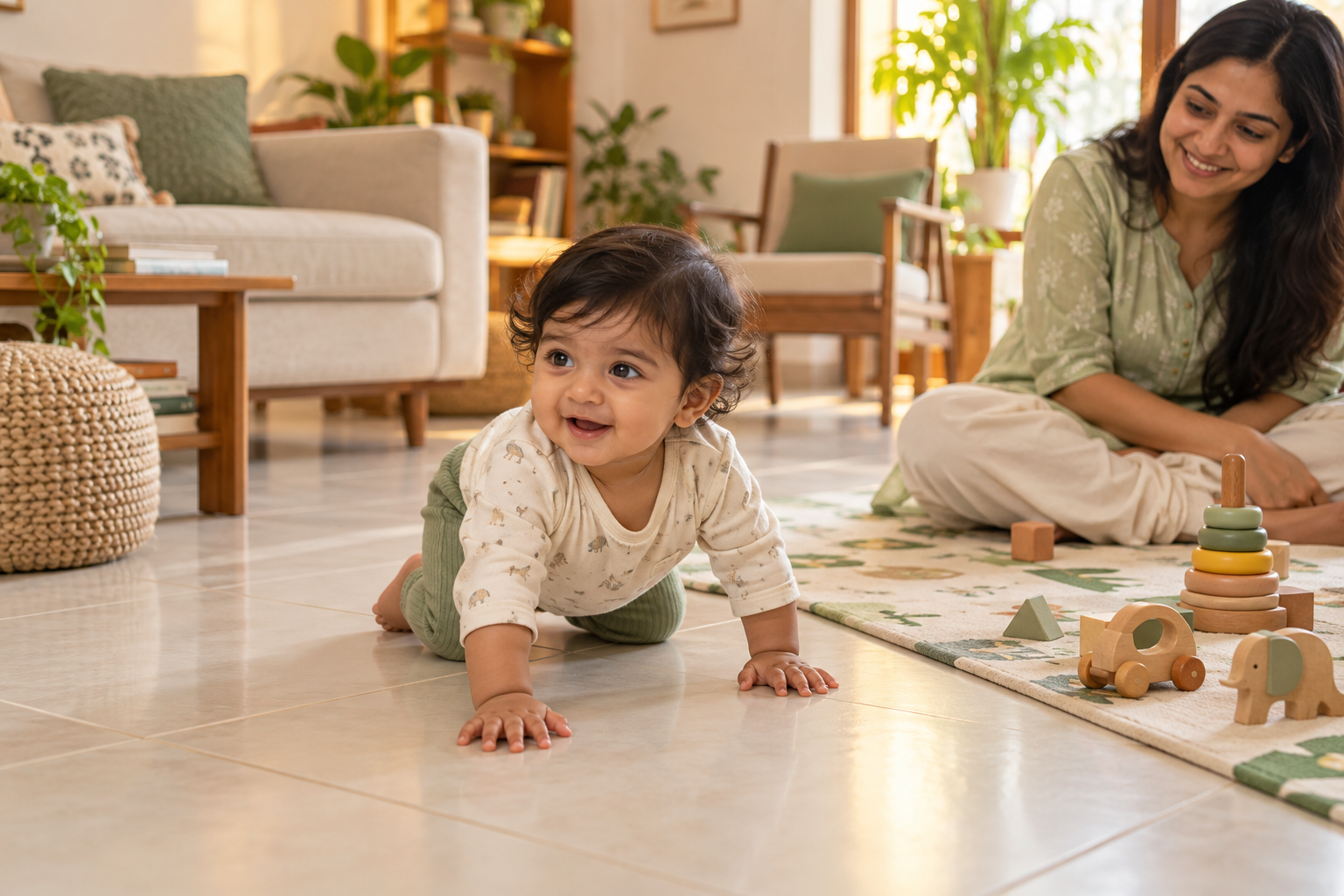
When a child starts crawling, floors become a play area. Toys roll under furniture, crumbs fall during snack time, and little hands touch surfaces before moving to the mouth. The goal is not to make a home sterile; it is to remove everyday dirt, reduce avoidable hazards and use cleaning products according to their directions.
No floor cleaner should be described as automatically safe for a child simply because it is plant-based, chlorine-free or lightly scented. Safety depends on the full formulation, the way it is used, the surface, and the child’s exposure. LOCI Floor Cleaner’s label says to dilute one 20 ml capful in 7.5 litres of water, mop normally and leave without rinsing. Follow the label, keep the child away during cleaning, and allow the floor to dry before play resumes.
Practical steps
Clear toys and play mats. Put toys, blankets and floor cushions in a clean basket away from the area being cleaned. Wash toys and fabric items according to their own care instructions if they have become dirty; floor mopping does not clean them.
Remove dry debris. Sweep or vacuum crumbs, dust, hair and small particles before using water. This helps prevent dirt from becoming a wet smear and makes it easier to notice small objects that could be choking hazards.
Clean spills separately. Pick up food spills and sticky patches with a cloth first. For bodily fluids or pet accidents, follow appropriate hygiene guidance rather than treating a routine floor-cleaner solution as a disinfectant. Never mix cleaning products.
Measure the floor-cleaner solution. For routine use, dilute one 20 ml capful of LOCI Floor Cleaner in 7.5 litres of water, as printed on the label. Use a clean mop and wring it out well. Avoid pouring extra product into the bucket because a stronger solution is not a reliable way to improve cleaning.
Keep the mop clean. On a large floor, use two buckets: one for the measured cleaning solution and one for plain rinse water. Rinse and wring the mop in the plain-water bucket before dipping it back into the cleaning solution. Replace dirty rinse water as needed.
Wait for the floor to dry. Keep the child and pets in another room while mopping and until the surface is dry. The drying time varies with airflow and humidity, so do not rely on a fixed five-minute promise. Return toys and play mats only when the floor is dry.
Helpful tips for a child-friendly routine
- Clean high-touch toys separately. Follow the toy manufacturer’s washing instructions. Some toys can be washed with soap and water; others need a different method.
- Keep snacks off freshly cleaned floors. If a child drops food, discard it when appropriate rather than assuming a clean-looking floor makes it safe to eat.
- Store chemicals securely. Keep the bottle closed, upright and out of reach. Never leave a filled bucket unattended where a child can reach it.
- Ventilate the room. Follow the product label and provide normal ventilation during use. Do not infer that the absence of bleach means there can be no irritation.
- Use clean cloths for different tasks. A cloth used for a pet accident should not be reused on toys, dining surfaces or kitchen counters without proper laundering.
What to avoid
Avoid making claims that the floor is “chemical-free,” “completely residue-free” or safe for direct food contact unless those claims have been substantiated. All cleaning products are made of chemicals, including water and plant-derived ingredients. “Plant-based” describes ingredient origin; it is not a guarantee of non-toxicity.
For everyday floor care, a measured dose, a clean mop, prompt spill removal and a fully dry surface are sensible habits. They support a clean play space without relying on fear-based marketing or promises no routine cleaner can guarantee.
Make play areas easy to reset. Use washable play mats and clean them separately according to their care instructions. Check under them regularly because crumbs and moisture can accumulate at the edges.
Handle accidental exposure seriously. If a child gets cleaning product in the eyes or mouth, follow the label’s first-aid directions and seek appropriate medical or poison-control advice. Do not rely on the product’s plant-based positioning as a safety measure.
Build a repeatable routine. A brief sweep before mopping and washing the mop after use are more useful than adding extra cleaner. Keep the bottle, bucket and mop out of reach whenever they are not actively being used.