
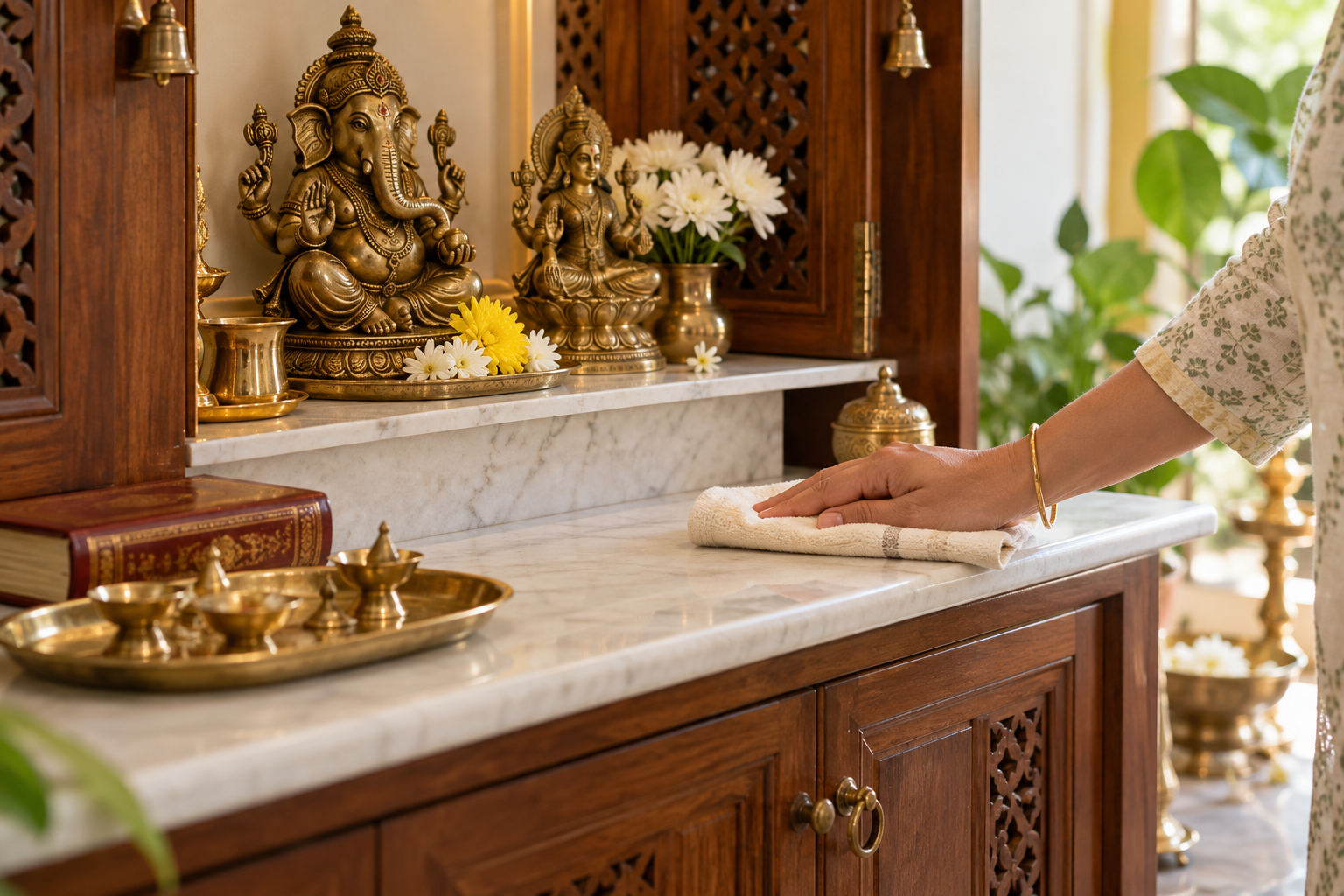
A puja ghar can hold daily-use diyas, incense holders, brass idols, framed pictures and a shrine made from marble, wood, laminate or another material. Oil, ash and agarbatti soot can build up gradually, especially around the diya area and on shelves above incense. Cleaning this space is best done carefully, with attention to the material rather than one product for every object.
The aim is to keep the area cared for without damaging the finishes or treating meaningful objects like ordinary household surfaces. Gentle dust removal, prompt attention to spills and a clear separation between shrine objects and cleaning products make the routine easier.
Begin with a safe, dry clean
Make sure diyas are extinguished, completely cool and away from fresh flames before cleaning. Move lit incense, embers and hot objects to a safe place. Never spray cleaner near a flame, hot wick, electrical lamp or incense ember.
Remove loose ash and dry dust with a soft cloth or brush, taking care not to scatter soot across the shrine. Use light strokes around carvings, frames and delicate decorations. If an object is fragile, antique or valuable, avoid experimenting with cleaning methods and consult an appropriate conservator or specialist.
Treat each material differently
Wooden or laminated shelves may tolerate a lightly damp cloth if the finish allows it. Avoid soaking the surface, especially around joints and edges, and dry it promptly. Excess moisture can swell wood, lift laminate or affect adhesives.
For marble, avoid vinegar, lemon juice and acidic products because they can etch the stone. Use clean water or a cleaner specifically approved for the type of natural stone. Do not assume a general floor cleaner is safe for marble just because it is intended for household floors.
Brass idols, bells and puja utensils need particular care. A general kitchen or surface cleaner should not automatically be assumed suitable for brass, lacquered finishes, silver plating or antique objects. Remove simple oil residue with a soft cloth and follow the item maker’s advice for tarnish. Abrasive polishing can alter fine details or finishes.
Glass frames and cabinet doors may be cleaned with a suitable glass cleaner if the label confirms compatibility. Apply product to a cloth when appropriate instead of spraying near framed pictures, painted details, idols or offerings. Keep liquid away from the back of photographs and paper artwork.
Remove oil and soot without spreading them
Once the diya area is cool, gently blot oil rather than wiping it across a larger surface. Use a clean cloth and change to a fresh area as residue transfers. For soot, start dry and lightly; adding liquid too early can smear fine particles into the finish. If a mark remains, identify the material and consult its care instructions before applying a product.
Do not use strong chemicals, rough scrubbers or improvised mixtures on delicate objects. Never mix cleaning products. Keep cleaning products separate from food offerings, flowers, prasad, incense and other puja materials.
Where LOCI products may help
LOCI Kitchen Surface Cleaner may be suitable for a shrine’s hard surface only when the current label lists that material as compatible. LOCI Glass Cleaner can be used on compatible glass surfaces according to its directions. Neither product should be assumed suitable for brass, antique objects, marble, painted details or every shrine finish unless the label explicitly supports that use.
Use the smallest amount directed, apply carefully and follow any rinsing instructions. Keep bottles away from the worship area while cleaning and store them securely afterward. LOCI’s role is to support informed everyday home care; it should not be presented as a specialist restoration product for sacred, antique or delicate objects.
Keep the area ready for daily use
Wipe small oil spills after the lamp has cooled, remove loose soot before it accumulates and keep the room ventilated during incense use. Let shelves and surfaces dry fully before returning objects to their places. Wash cloths after cleaning and store them separately from cloths used for food preparation.
A respectful routine does not need aggressive polishing or a strong fragrance. Careful handling, gentle dust removal and material-specific cleaning help maintain the puja ghar while protecting the objects and finishes that make it personal to your home.
Frequently asked questions
Can I use vinegar on marble in the puja ghar? No. Acids can etch marble.
Can I spray glass cleaner around idols and framed pictures? Avoid direct spraying. Use a cloth method where appropriate and follow the label.
Can LOCI Kitchen Surface Cleaner clean brass? Only if the current label explicitly confirms suitability for the particular finish; otherwise, follow the object maker’s advice.
The takeaway: Let everything cool, remove dust gently and match the method to the material. The most respectful clean is the one that protects the space and the objects within it.