
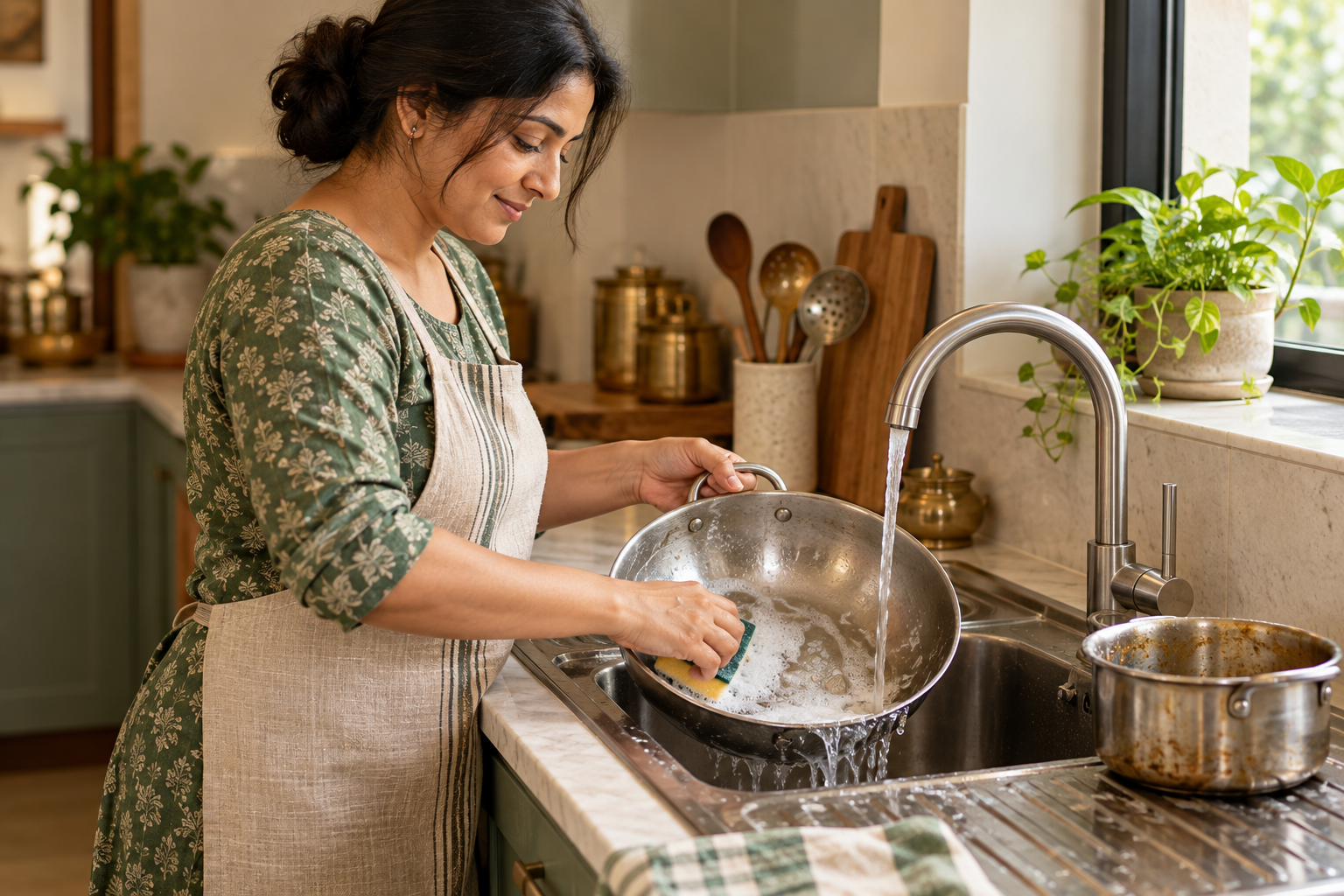
After making tadka, frying pooris or cooking a rich curry, the ghee pot and kadai can be the hardest things to wash. A thin layer of fat clings to the surface, while burnt masala sticks around the edges. Repeated scrubbing takes time and can leave hands feeling dry or irritated. Instead of attacking the pan with a rough scrubber, start by loosening the residue.
A soak-first routine is not complicated. It gives water and detergent time to work, reduces the force needed for ordinary greasy messes and helps protect cookware finishes from unnecessary abrasion.
Let the cookware cool first
Never handle a hot kadai or pour cold water into cookware unless the manufacturer’s instructions permit it. Let the utensil cool to a safe temperature. Wipe out excess ghee or oil with a paper towel or a cloth reserved for greasy cleaning, then dispose of the fat appropriately. Avoid pouring large amounts of oil or ghee down the drain, where it can contribute to blockages.
For ordinary greasy residue, add warm water and a suitable amount of dishwashing liquid. Let the pan soak for a while, then wash with a sponge or brush that suits the material. A soft nylon brush or non-scratch pad may be appropriate for some utensils, but always check the cookware maker’s instructions.
Deal with burnt food patiently
Burnt dal, masala or sugary sauces may need more soaking than ordinary oil. Remove softened food with a tool that will not scratch the surface. Avoid using a knife or metal scraper on non-stick coatings and delicate finishes. If the food remains firmly attached, follow the manufacturer’s recommended method rather than escalating to a stronger chemical or excessive force.
Cookware types differ. Stainless steel, aluminium, cast iron and non-stick pans do not all tolerate the same cleaners or scrubbers. Avoid assuming that a method that works on stainless steel is safe for every pan. If a coating is damaged, stop using abrasive methods and consult the cookware guidance.
Protect your hands during dishwashing
Frequent wet work and exposure to detergents can irritate skin in some people. If your hands are sensitive, consider suitable reusable washing-up gloves. Avoid keeping hands submerged for long periods, rinse splashes from skin, and dry your hands thoroughly after washing. If irritation recurs, review the product instructions and your cleaning method; plant-derived ingredients are not automatically non-irritating for every person. [1, 2]
Use a comfortable sponge handle or brush if gripping and scrubbing are tiring. Reducing the amount of force needed to clean the pan can make the task easier on hands and wrists. Keep the sink area organised so you are not repeatedly lifting heavy, slippery cookware.
Use dishwash liquid thoughtfully
Oily ghee pots and burnt kadais can be challenging to clean because ghee leaves behind a stubborn greasy film, while cooked-on food residue can cling tightly to the surface. The right cleaning method can help loosen the mess without unnecessary scrubbing or damaging your cookware.
LOCI Dishwash Liquid is designed for everyday manual dishwashing. For greasy utensils, start with 1–2 pumps for regular soiling or 2–3 pumps for tougher grease and food residue. If the residue is stubborn, soak the utensil in water with the dishwash liquid for about a minute before washing. This gives the enzymes time to act on the types of food residue they are formulated to break down. Then use a suitable sponge to clean the surface.
Avoid abrasive scrubbers on non-stick coatings and other delicate finishes. For burnt-on residue, allow the utensil to soak longer in warm water if the cookware manufacturer’s instructions permit it, rather than relying on aggressive scrubbing. Rinse all utensils thoroughly with clean water after washing.
Protecting your hands matters, too. Prolonged contact with water and cleaning products can dry or irritate the skin, so consider wearing dishwashing gloves if you have sensitive skin or are washing a large number of utensils. Follow the product’s directions, avoid unnecessary skin contact and never mix dishwash liquid with bleach, toilet cleaner or other household chemicals.
The LOCI approach is simple: use the right amount of dishwash liquid, give stubborn residue time to loosen, choose a suitable sponge and rinse thoroughly. Effective cleaning should not require excessive product or harsh scrubbing that could damage your cookware or irritate your hands.
Make the next wash easier
Wash greasy cookware soon after it cools. Wipe away excess fat before adding water, soak stuck-on residue, and clean the outside of the kadai as well as the cooking surface. Replace rinse water when it becomes visibly greasy, and dry the utensil before storing it if that is recommended for the material.
These small steps can save time. They also help avoid the cycle of adding more detergent, scrubbing harder and still feeling that the utensil is not clean.
Frequently asked questions
Should I wash a hot kadai immediately? Let it cool to a safe temperature and follow the manufacturer’s guidance.
Can I use a metal scrubber on burnt food? Only if the cookware maker permits it. Metal pads can damage coatings and some finishes.
Will plant-based dishwash liquid never irritate skin? No ingredient source guarantees that a formula cannot irritate someone. Follow the label and protect sensitive hands.
The takeaway: Wipe away excess fat, soak, wash with a suitable tool and rinse thoroughly. A little patience often works better than force.