
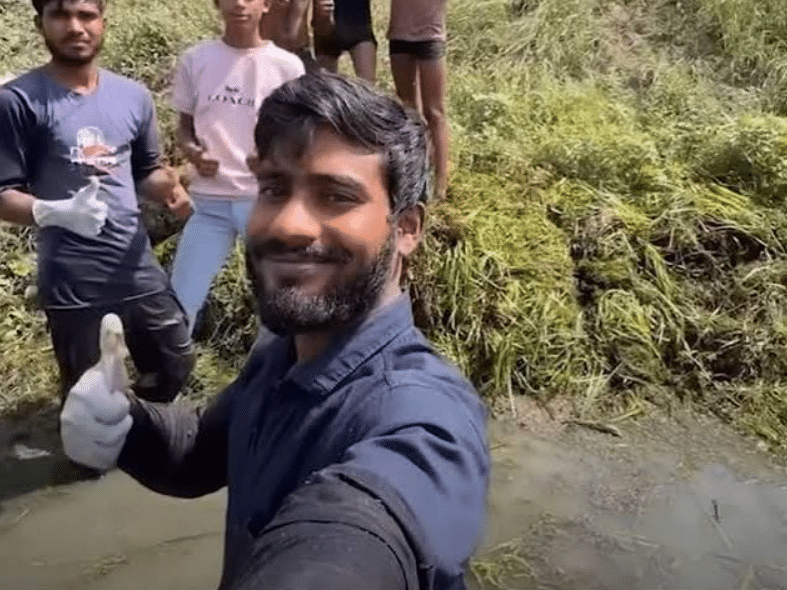
Manorama River, Basti district, Uttar Pradesh
Young volunteer Akash Gupta and a small group of fellow volunteers took on the polluted Manorama River. Reports on their effort describe more than 500 kilograms of waste being removed over 39 days.
The figure gives a sense of the work involved, but it also raises a more uncomfortable question: how did so much waste end up in a river in the first place? Cleaning a river stretch is demanding work. Waste can be mixed with mud and vegetation or trapped along the banks, and removing it takes time and repeated effort.
Removing rubbish from a particular stretch is meaningful, but it does not automatically mean the whole river has been restored or that its water is safe. Long-term improvement depends on preventing further dumping, managing sewage and maintaining the waterway.
The takeaway: Progress deserves recognition, but it should not be confused with a completed solution. A cleaner riverbank is a start—and a reason to keep going.