Use cleaning products carefully and understand what biodegradability claims can—and cannot—tell you.
Cleaning does not end when a floor dries or a dish is rinsed. Used solution and rinse water enter the drainage system, where their eventual treatment depends on local infrastructure. Product ingredients, concentration, volume used and disposal practices all affect environmental impact.
Practical steps for lower-waste cleaning
Measure the product. Use the dose on the label. For LOCI Floor Cleaner, the label specifies one 20 ml capful in 7.5 litres of water. Do not add extra product because the water looks too clear or because you expect more foam. Correct dosing reduces waste and helps avoid unnecessary residue.
Prepare only what you need. Estimate the area before filling a large bucket. Avoid making more cleaning solution than the task requires. Follow the product’s storage and disposal directions for any unused mixture.
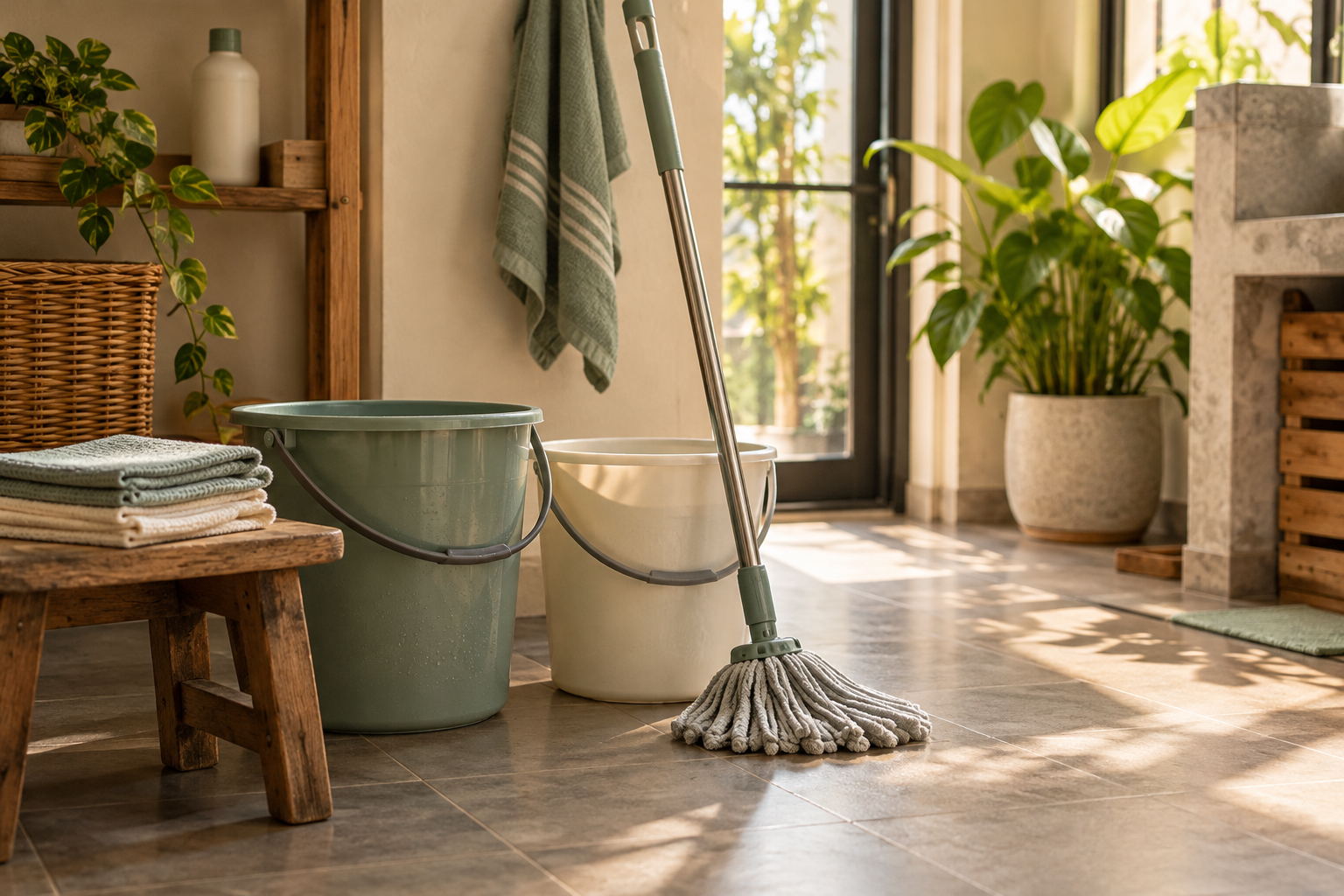
Keep rinse water separate. A two-bucket mopping system can help prevent dirty rinse water from contaminating the cleaning solution too quickly. Use one bucket for the measured cleaner and another for rinsing the mop. Replace the rinse water when it becomes dirty; do not keep using visibly muddy water.
Reduce water use sensibly. Turn off the tap while scrubbing dishes and open it only when rinsing is needed. Use a basin for small loads where practical. Avoid leaving water running simply to create a continuous rinse.
Reuse tools, not dirty solution indiscriminately. Washable microfiber cloths and durable mop heads can reduce disposable waste when cleaned and maintained properly. Do not automatically reuse a bucket of floor-cleaning solution on unrelated surfaces such as car tyres, balcony rails or plants; the product may not be intended for those materials or uses.
Tips and tricks
Choose the right cloth: A reusable cloth works well when it can be washed and dried fully. Replace cloths that remain greasy, frayed or odorous.
Keep cleaning tasks targeted: Spot-clean visible spills rather than repeatedly spraying large areas that are already clean.
Use less packaging where possible: When choosing products, consider whether the packaging is accepted by local recycling systems. A recyclable symbol does not guarantee that every local facility accepts that type of plastic.
Read the ingredient information: Ingredient origin, biodegradability, skin irritation potential and aquatic toxicity are different properties. One claim does not prove the others.
Avoid excessive
le-rinse water on plants as a universal recommendation if it contains detergent or cleaner. Plain vegetable-washing water may be suitable for some uses depending on what is in it, but cleaning solution is a different fragrance: Fragrance does not improve dirt removal by itself and can bother some users. Choose products based on the task, label and household needs.
Keep chemicals out of reach: Correct storage prevents accidental spills, ingestion and unnecessary disposal.
Thoughtful cleaning should be practical: buy what you need, measure it correctly, use the right tool, maintain surfaces regularly and avoid unnecessary waste. A brand earns trust by making these decisions easier—not by asking customers to accept unsupported claims.
Track what lasts. Note how many buckets or cleaning sessions you get from a bottle when measured correctly. That gives a more useful cost-per-use comparison than comparing only package prices.
Buy tools that can be maintained. A washable cloth or durable mop head can be good value when it can be cleaned effectively and dried between uses. Replace items that retain odour or no longer remove soil.