
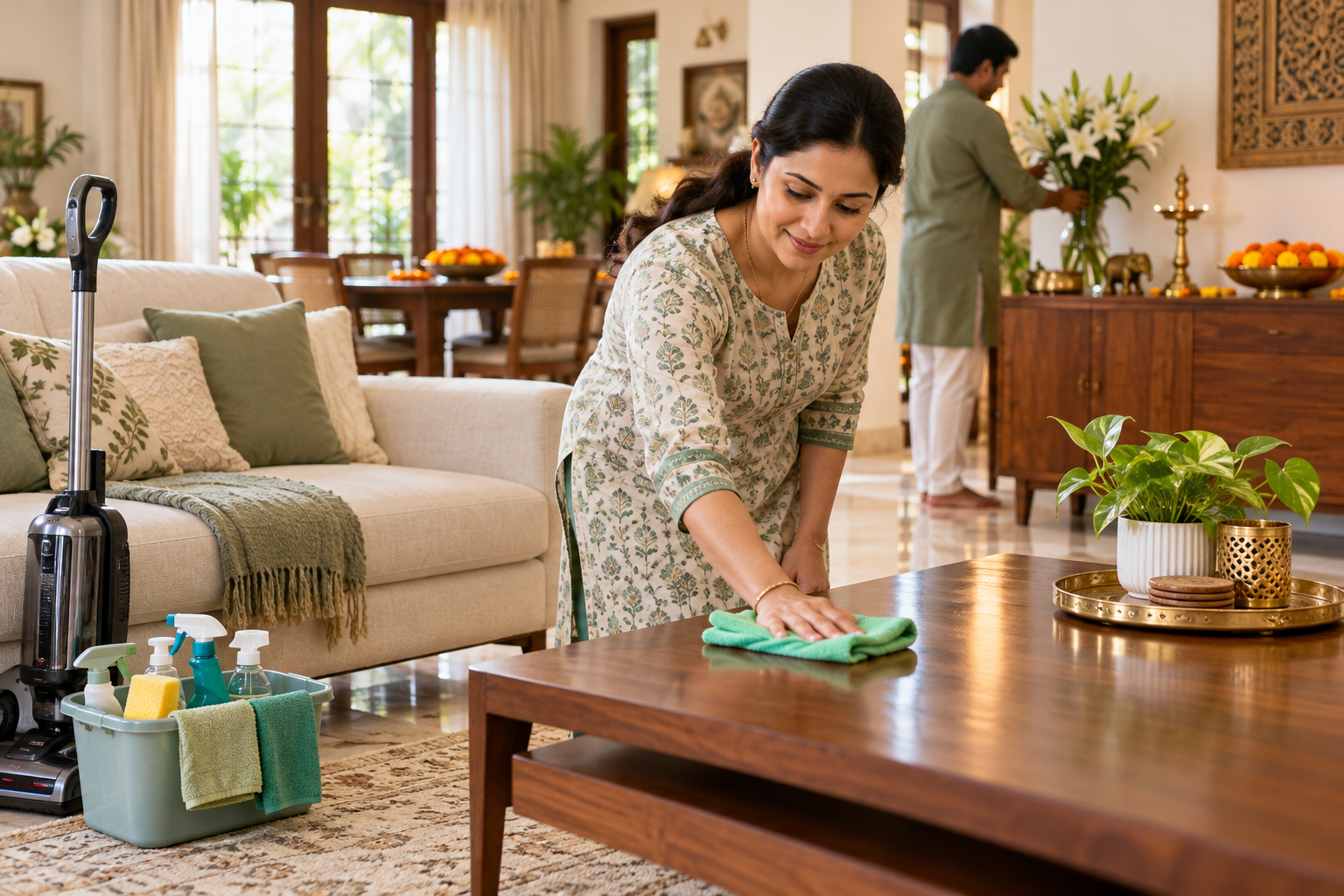
Before Diwali, Eid or a family gathering, it can feel as though the whole house needs to be cleaned in one exhausting day. A room-by-room plan makes the job more manageable and helps prevent the same surface being cleaned twice. The most useful sequence is to clear clutter, dust from high to low, tackle the kitchen and bathroom, clean glass, wash utensils and leave floors until the end.
Festive cleaning should not mean using the strongest product on every surface. Marble, laminate, stainless steel, glass, coated fittings and cookware have different needs. The right product and method can save time while reducing the risk of damage.
Step 1: Plan before you start
Gather clean cloths, a soft broom or dust mop, suitable sponges, gloves if needed and the cleaning products you plan to use. Read the labels before opening bottles. Check intended surfaces, dilution, contact time, rinsing and ventilation instructions. Do not mix products or pour cleaners into unlabelled containers.
Work in sections and keep children and pets away from buckets and concentrated products. Open windows or use ventilation where the product directions recommend it. Start with decluttering so you can clean surfaces properly rather than working around piles of objects.
Step 2: Dust from the top down
Dust fans, shelves, ledges, cupboard tops and other high surfaces before cleaning tables and lower areas. Use a suitable cloth or tool and avoid scattering dust across already-cleaned floors. Wipe frequently touched handles and switches carefully. Do not spray liquid directly into electrical fittings; use an appropriate cloth method and follow safety guidance.
Clean mirrors and glass after dusting. Use a glass cleaner only when its label confirms compatibility with the glass or coating. Apply product carefully, work in small sections and buff with a clean, lint-free cloth.
Step 3: Give the kitchen focused attention
Clear counters and remove loose food before cleaning. Wipe old spills, then address the hob only after it has cooled. Give attention to the backsplash, cabinet handles, sink, appliance exteriors and glass near the cooking area. Grease and turmeric need different approaches: blot oil first and lift food residue rather than spreading it.
Choose a product compatible with each material. Marble, laminate, stainless steel and glass may need different care. Do not use a general surface cleaner on every counter simply because it is convenient. For plates, glasses, cookware and utensils, use dishwashing liquid intended for that purpose and rinse thoroughly. Keep surface cleaning and dishwashing separate unless a product label explicitly permits both uses.
Step 4: Wash dishes and cookware carefully
Wipe excess ghee or oil from cookware where practical, let hot utensils cool and soak ordinary stuck-on food. Use a sponge or brush suitable for the finish. Avoid metal scrubbers on non-stick coatings or delicate surfaces unless the manufacturer permits them. Use the labelled amount of dishwashing liquid, then rinse every surface, including rims, lids and handles.
Step 5: Reset the bathroom
Clean the basin, toilet exterior, shower area, taps and floor with products compatible with those materials. Pay attention to water marks, soap residue, drain surrounds and frequently touched points. Natural stone needs special care; acidic descalers can damage marble and similar materials. Do not use a product simply because it is marketed for bathrooms—check the surface instructions first.
After cleaning, wipe standing water where appropriate and ventilate the room so surfaces can dry. If a recurring odour or dark patch persists, investigate the source instead of covering it with fragrance.
Step 6: Finish with the floors
Sweep or dust-mop first so grit is not dragged across the floor. Choose a floor cleaner that lists the particular floor material as compatible, measure the dose correctly and use a clean mop. Change dirty water as needed and rinse if the product label requires it. Leave the floor to dry before normal foot traffic resumes.
Where LOCI fits into the checklist
Festive cleaning often involves several tasks, from mopping floors and wiping kitchen counters to cleaning glass surfaces and washing dishes. LOCI offers a dedicated product for each of these everyday needs.
LOCI Floor Cleaner: For routine mopping of compatible floors, including marble, granite, laminates, tiles and sealed stone surfaces. For floor areas exceeding 1,000 sq. ft., use 2 capfuls in 15 litres of water.
LOCI Kitchen Surface Cleaner: For tackling grease, oil splashes, masala stains and food residue on suitable kitchen surfaces, including compatible countertops, stovetops, backsplashes and appliance exteriors.
LOCI Glass Cleaner: For cleaning compatible glass surfaces and mirrors, helping keep them clear and presentable.
LOCI Dishwash Liquid: For everyday manual washing of plates, glasses, cookware and utensils. Use 1–2 pumps for normally soiled dishes and 2–3 pumps for tougher grease and food residue.
Using separate products for different tasks helps make your festive cleaning routine more organised and practical. Follow each product’s recommended directions, use the appropriate amount and take care with delicate surfaces and finishes.
The LOCI approach is simple: plan your cleaning room by room, choose the right product for each task and work through the checklist systematically. A festive deep clean doesn’t require one product for everything—just the right products and a consistent routine
The final check
Before guests arrive, look for visible spills, sticky handles, streaked glass, damp bathmats and wet floors. Put products away in their original containers, wash reusable cloths and ventilate rooms as needed. A clean home is not the result of one heroic session; it is the outcome of a sensible sequence and a few repeatable habits.
The takeaway: Plan room by room, match each product to the surface, and save the floors for last. A thoughtful routine is more useful than using stronger products everywhere.