
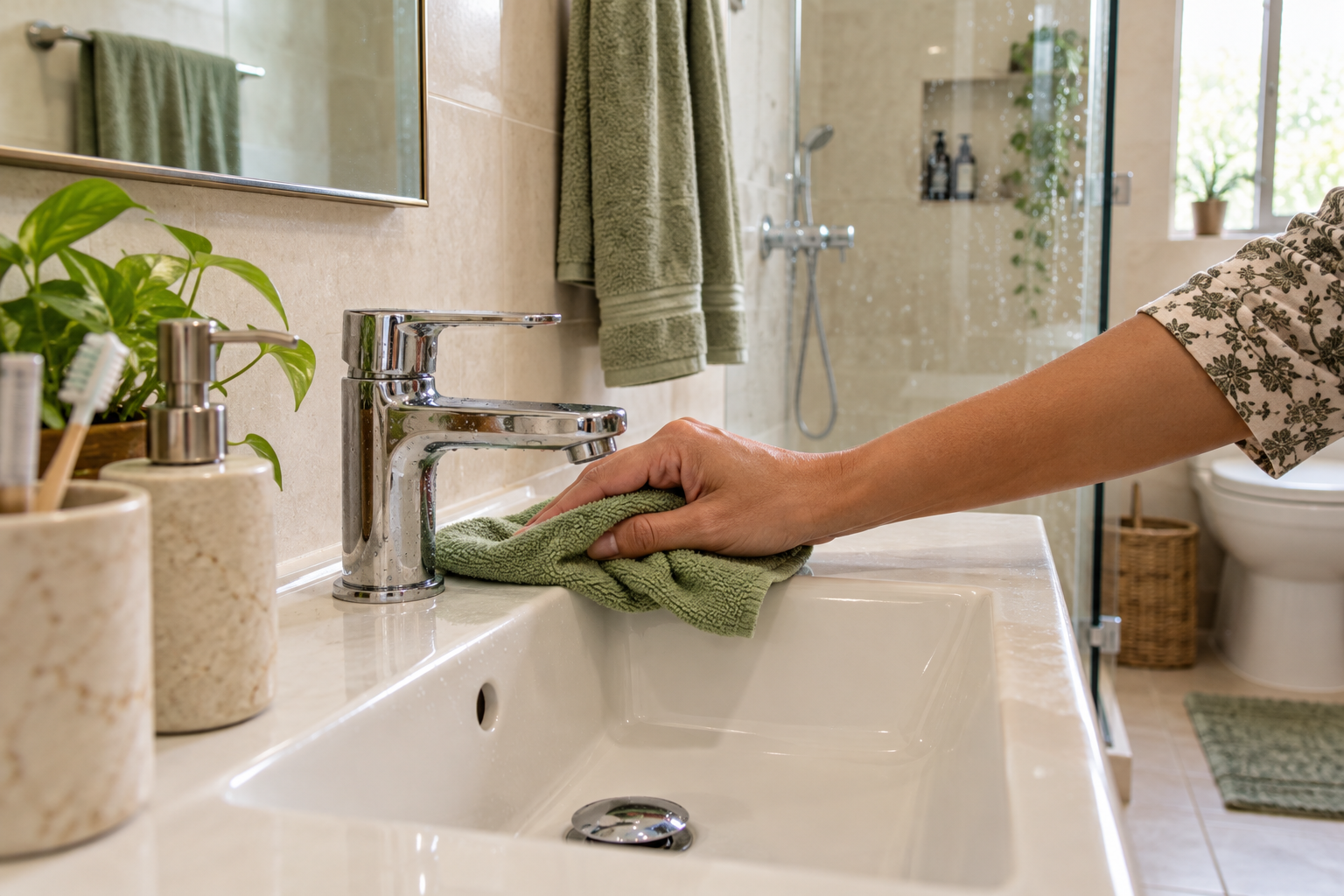
A shiny tap, neatly arranged toiletries and a freshly mopped floor can make a bathroom look spotless. Yet hard-water marks, soap residue, moisture and overlooked touchpoints can build up even when the room appears clean. The answer is not necessarily a stronger chemical or a long weekend scrub. It is a manageable routine that catches small problems before they become stubborn.
Bathrooms are used repeatedly throughout the day, and different surfaces face different conditions. Water evaporates from taps and shower screens, soap and shampoo leave films, and damp corners may take longer to dry. A better routine pays attention to these everyday patterns rather than focusing only on the most visible areas.
Look beyond the floor and basin
The floor, mirror and washbasin usually get the most attention. But taps, shower fittings, tile joints, drain surrounds, door handles, flush buttons, light switches and the area around toiletries can be missed. These spots may collect water marks, product residue or frequent hand contact.
Build a quick visual scan into the routine. Look at the base of taps, the underside of the basin edge, the corners of the shower area and the floor around the drain. Clean each area with a product appropriate for its material. For switches and electrical fittings, avoid spraying liquid directly; use a suitable cloth method and follow the product and appliance guidance. [1]
Understand hard-water marks and soap film
In hard-water areas, droplets left to dry can leave mineral deposits on taps, shower screens and tiles. Soap, shampoo and body products can also leave a film that traps grime. These deposits are not always the same problem, so do not automatically treat every mark with an acidic descaler.
Marble and other acid-sensitive stones can be etched by acidic products, including some descalers. Chrome, coated fittings, glass, acrylic, grout and natural stone may each have specific care requirements. Check the surface maker’s instructions before selecting a product. If the product is not approved for the material, do not assume it is suitable just because it is sold for bathrooms.
After bathing, use a squeegee or soft cloth on surfaces where the manufacturer permits it. Wipe standing water from the basin and fittings, and keep the room ventilated. These habits help surfaces dry between uses and can reduce the amount of residue that accumulates.
Make a routine that fits real life
A practical bathroom routine has three levels. First, handle obvious splashes as they happen: wipe the basin, remove pooled water and rinse away visible soap residue. Second, check high-touch areas and the floor regularly. Third, set aside time each week for a more thorough clean of the toilet exterior, basin, shower area, fittings and corners.
Wash bathmats and towels according to their care instructions, and allow them to dry fully. Keep the drain area clear of hair and visible debris. If a persistent odour or dark patch keeps returning, look for the source rather than masking it with fragrance. Trapped moisture, a drain problem, damaged sealant or deteriorating grout may need a different solution.
Use products carefully and never mix them
Choose a cleaner that is labelled for the surface, follow the stated dilution and contact time, and rinse when instructed. Test an unfamiliar product on a small, inconspicuous area if the label recommends it. Do not mix bleach with acids, vinegar, ammonia or another cleaner; dangerous reactions or fumes can result. [1]
More concentrate does not necessarily mean a cleaner bathroom. Using too much product can leave residue, while rough pads may scratch certain fittings and finishes. Use separate cloths for different tasks and wash them after cleaning.
Where LOCI fits
LOCI is a home-care brand built around choosing the right product for the job. In the bathroom, different surfaces and types of mess call for different cleaning approaches.
LOCI Glass Cleaner can be used to clean mirrors, glass surfaces, cabinets and drawers, helping keep them clean and presentable as part of your regular bathroom routine.
For tougher, greasy or sticky messes, such as hair oil residue and toothpaste splatters on suitable surfaces, LOCI Kitchen Surface Cleaner can be used to help lift the grime. It is also suitable for bathroom countertops made of marble, granite and laminates.
The key is to match the product to the surface and the type of mess. Use LOCI Glass Cleaner for everyday glass cleaning and LOCI Kitchen Surface Cleaner for tougher residue on suitable counters and other compatible surfaces. Follow the recommended directions for each product.
The LOCI approach is simple: choose the right cleaner for the surface, tackle stains before they build up and make regular cleaning part of your routine.
Frequently asked questions
Why do water marks keep returning? Droplets can leave mineral deposits as they dry. Wiping surfaces dry and following material-specific care guidance can help.
Should I use a strong descaler on every bathroom surface? No. Acids can damage natural stone and some finishes. Check compatibility first.
How often should I deep-clean? It depends on household use and moisture. Small, frequent maintenance plus a regular thorough clean is more manageable than waiting for heavy build-up.
The takeaway: A bathroom does not need constant deep cleaning. It needs consistent attention, suitable products, ventilation and time to dry.