
Remove spice dust, oily rings and sticky shelf grime without contaminating stored ingredients.
The shelf or drawer holding a masaladabba can collect more than dry spice powder. Turmeric, chilli, mustard seeds and flour settle into corners, while cooking vapour leaves a thin oily film on nearby surfaces. When dust sticks to that film, a quick dry wipe may spread it instead of removing it. The solution is to clear the shelf, remove loose particles first and clean the remaining grime with a product suitable for the cabinet material.
Because this area is used to store food ingredients, keep spice jars and open containers away from cleaning spray. Do not describe a general-purpose surface cleaner as food-safe unless the product is specifically supported and labelled for that use. Follow LOCI Kitchen Surface Cleaner’s instructions and the cabinet manufacturer’s care guidance.
Practical steps
Empty the shelf. Remove spice jars, the masaladabba, scoops and any liners. Place them on a clean, dry surface away from the cleaning area. Close all spice containers to prevent moisture or cleaning spray from reaching their contents.
Brush away dry particles. Use a small, soft brush or dry cloth to collect mustard seeds, chilli flakes and loose spice powder from corners and shelf tracks. A handheld vacuum can also help, if suitable for the shelf. Avoid rubbing dry spice particles into sticky patches, as this can spread the mess.
Check the shelf material..Use LOCI Kitchen Surface Cleaner on your wooden laminate or sealed hard surfaces. Avoid soaking wooden shelves or allowing liquid to collect around joints and edges. If the finish is delicate or you’re unsure about compatibility, test a small, hidden area first.
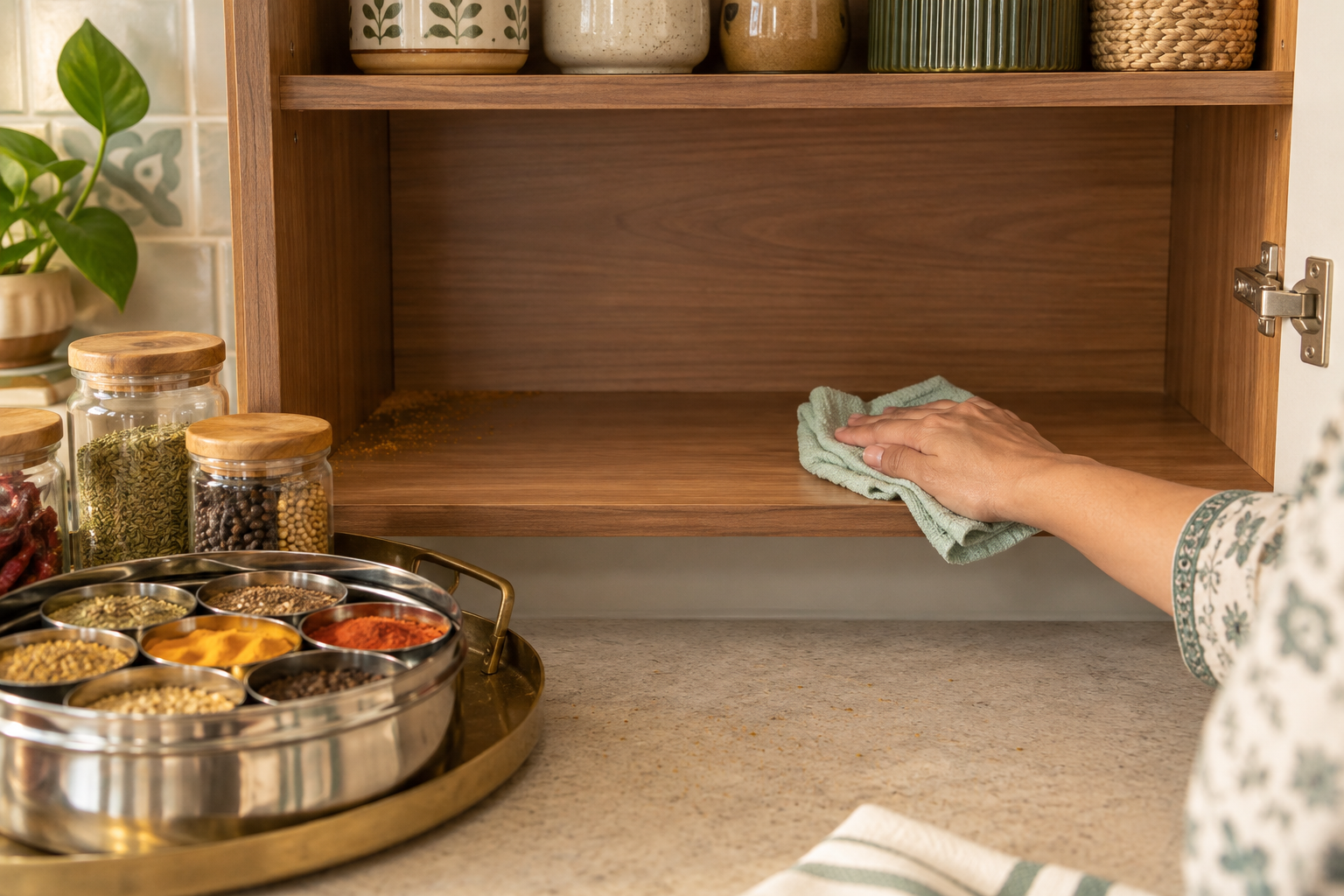
Clean the sticky residue. Apply LOCI Kitchen Surface Cleaner to a clean, soft cloth rather than spraying directly into the cabinet. Gently wipe the greasy rings and sticky spice residue, following the product label’s directions for use and contact time. Do not mix LOCI with other cleaning products.
Wipe and dry the shelf. Use a clean microfiber cloth to lift away loosened dirt and residue. For stubborn spills, repeat the LOCI cleaning process rather than scrubbing aggressively. Follow the product label’s rinsing instructions, then dry the shelf thoroughly with a fresh cloth. Pay particular attention to corners, shelf tracks and pin holes where moisture can collect.
Clean the containers before restocking. Wipe the outside and bases of spice jars with a clean cloth suitable for their material. Ensure the containers and shelf are completely dry before putting everything back. If a container lid or exterior has been contaminated with cleaning product, clean it appropriately and ensure no residue can come into contact with the spices before reuse.
Useful tips and tricks
Use trays for frequently used spices: A removable tray or washable mat catches loose powder and oil rings, making future cleaning easier. Ensure the material is food-storage appropriate and dry before returning it.
Label the shelf zones: Keep daily spices together and infrequently used ingredients elsewhere. Fewer items on the shelf mean fewer surfaces to wipe.
Clean the base of each jar: Sticky rings often hide beneath containers. A quick wipe during restocking prevents the grime from building up.
Use a dry brush before a wet cloth: This order avoids turning loose turmeric and chilli powder into a coloured paste.
Ventilate after cooking: Use a functioning exhaust fan where possible and wipe nearby shelves periodically to limit grease accumulation.
Avoid strong improvised mixtures: Vinegar, bleach, abrasive powders and concentrated cleaners can damage finishes or create risks when combined. Use a product approved for the material.
Common mistakes
Do not spray directly over open spices, leave a wet shelf to dry on its own if the material can swell, or return damp jars to a closed cabinet. Avoid assuming that a cleaner’s low fragrance or plant-derived ingredients make the cleaned shelf suitable for direct food contact.
A clean spice cabinet depends on removing loose dust first, treating oily grime carefully, keeping cleaner away from ingredients and drying the shelf fully before restocking. A few minutes of regular maintenance is easier than tackling a thick sticky layer later.
Protect stored spices. Keep jar lids closed and wipe spills from the outside of containers before returning them. If cleaner contacts the inside of a jar or the spice itself, do not assume it is safe to consume.
For wooden cabinets. Use minimal moisture and dry immediately. Liquid can swell wood, lift veneer or damage a painted finish, particularly around joints and exposed edges.
Schedule small cleans. A quick shelf wipe during spice restocking is easier than waiting for a thick mixture of oil and powder to build up.
Keep the cleaning area organised, use a fresh cloth when the current one is visibly dirty, and put products away as soon as the task is complete.