
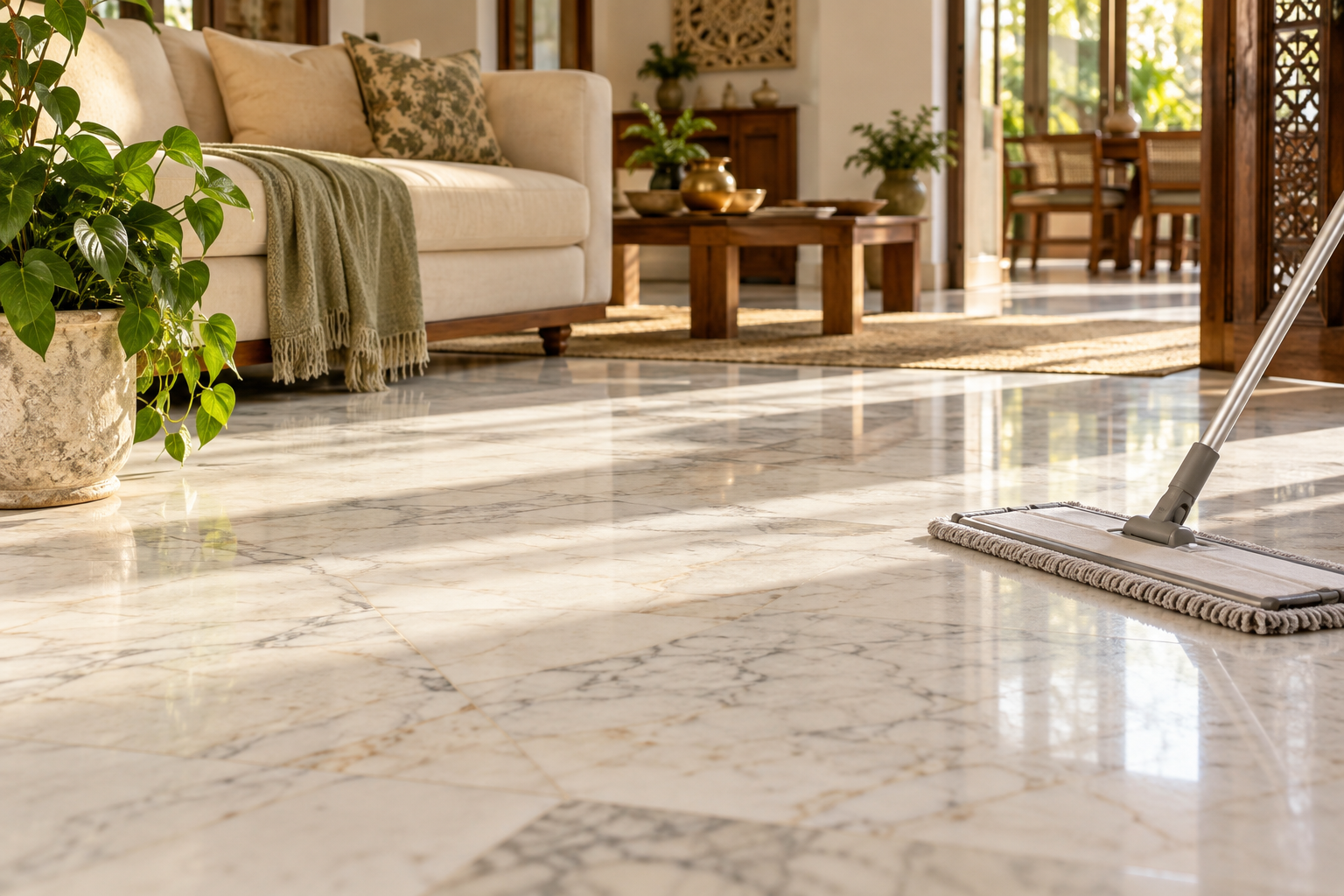
Choose the right everyday method for marble, granite, tiles and sealed stone.
Stone and hard flooring can last for years when they are cleaned with the right method. The important point is that “stone floor” does not describe one uniform material. Marble and Kota stone are generally calcium-carbonate-based and can be etched by acidic products. Granite is usually more resistant to acids, but its sealant and finish still matter. Ceramic and vitrified tiles have different surface properties again, while laminates can be damaged by water entering their joints.
Do not assume that a product is suitable for every surface just because it is pH-neutral or ammonia-free. LOCI Floor Cleaner is suitable for marble, granite, laminates, tiles and sealed stone surfaces. Follow the stated directions and test a small, inconspicuous area first if the flooring is new, coated, waxed, damaged or unfamiliar.
Practical steps
Remove grit before wet cleaning. Use a soft broom, dust mop or vacuum suitable for the floor. Fine sand can act like an abrasive underfoot or beneath a mop. Pay attention to corners and the area beside balcony doors where grit gathers.
Identify the finish. Determine whether the floor is polished, honed, sealed, waxed or unsealed if possible. If you are unsure, ask the installer or stone supplier. A cleaner suitable for one finish may not be appropriate for another.
Mix the cleaner accurately. LOCI’s label specifies one 20 ml capful in 7.5 litres of water. Do not add vinegar, lemon juice, bleach or another cleaner. Never mix cleaning products: combinations can damage surfaces or create hazardous fumes.
Use a damp, not dripping, mop. Work in manageable sections and avoid leaving pools of water. This is especially important on laminate, around grout and near unsealed edges. Use a clean mop head and rinse it regularly so grit is not dragged across the finish.
Dry standing water promptly. If water pools near joints or along the edges of stone, wipe it up with a clean cloth. Allow normal airflow to dry the floor. Do not use a harsh polishing compound to fix dull patches without identifying the cause.
Tips for keeping the finish looking good
Avoid acids on marble and limestone.:Vinegar, lemon juice, descaling products and acidic toilet cleaners can etch calcium-carbonate stone. An etched patch is surface damage, not simply dirt that needs more scrubbing.
Do not over-scrub:Use a soft microfiber mop or cloth. Steel wool, rough scouring pads and abrasive powders can scratch finishes and may damage sealers.
Treat spills promptly: Blot oily or coloured spills rather than rubbing them across the floor. Use a cleaner approved for that material and follow the stone supplier’s instructions for persistent stains.
Keep separate cleaning tools: A mop used on a balcony or entrance can carry grit indoors. Wash mop heads and cloths regularly.
Check after cleaning: If a patch looks cloudy, determine whether it is residue, hard-water deposits, etching or worn sealant before applying another product. Repeated cleaning with a stronger solution can make the problem worse.
Common myths
Ammonia and acids do not damage all materials through the same mechanism. Acids are particularly problematic for marble and limestone because they react with calcium carbonate. Ammonia is alkaline; its effect depends on concentration, formulation and the surface or sealant. Vitrified tile dullness may come from residue, abrasion or surface wear rather than the same acid reaction seen on marble.
Likewise, “sealed stone” does not mean waterproof or immune to damage. Sealers can wear down and need maintenance according to the supplier’s recommendations. A pH-neutral label alone does not prove compatibility with every finish.
The safest long-term routine is to remove grit, use a measured cleaner approved for the floor like LOCI Floor Cleaner, limit standing water and avoid improvised chemical mixtures. For etching, deep stains or damaged polish, consult a qualified stone-care professional rather than scrubbing harder.
A note on grout. Grout may be more porous than the tile beside it. Use a cleaner and brush suitable for the grout type, and avoid leaving excess liquid on unsealed grout. For discoloured or damaged grout, consult the installer’s maintenance guidance.
For newly installed flooring. Adhesive, grout haze, sealants and curing requirements can affect which products are safe to use. Follow the installer’s instructions before beginning routine mopping.
Keep a record of the finish. If the floor has been sealed or polished, note the product used and when it was applied. That information can help a professional identify the right maintenance method later.