
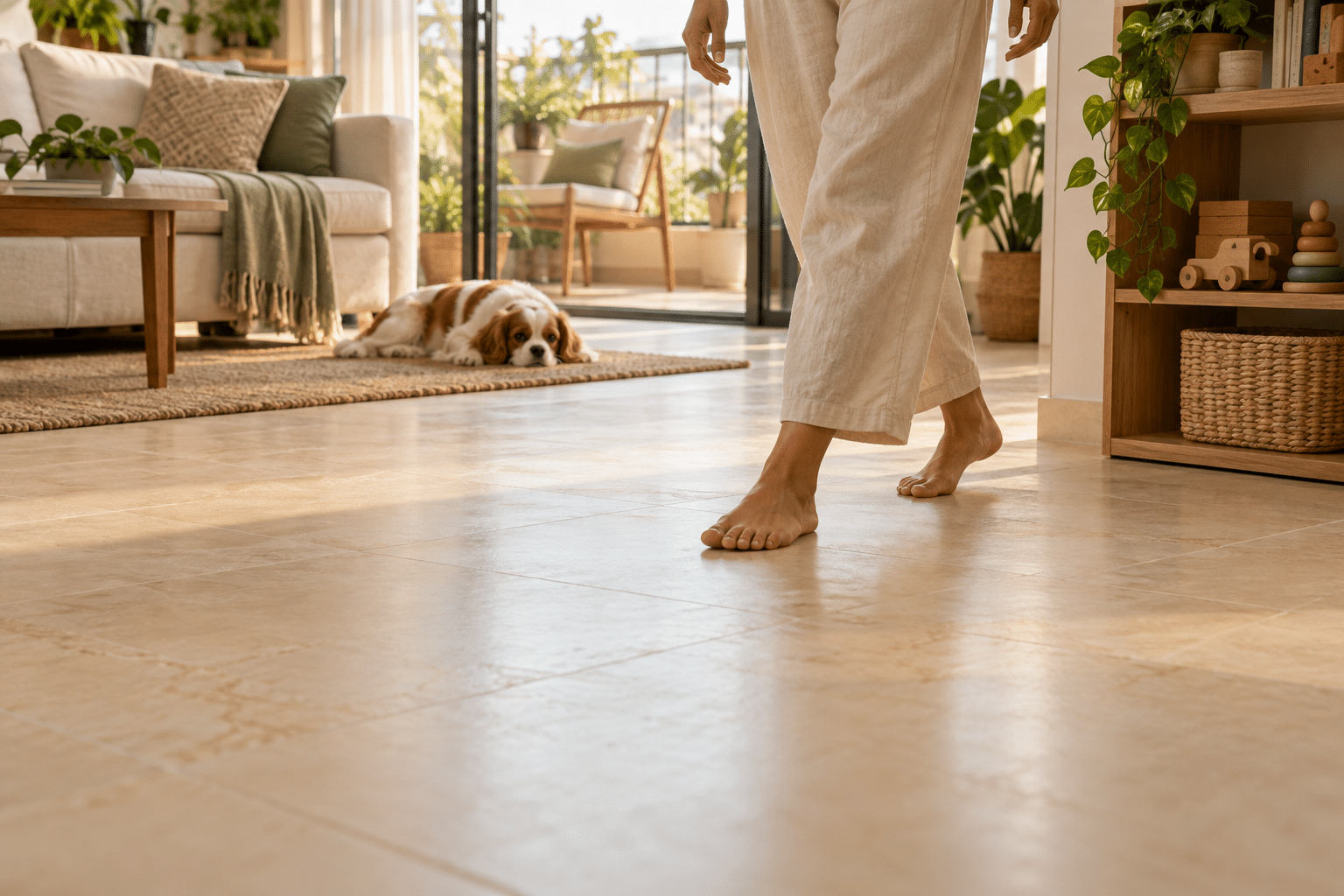
A practical daily mopping routine for homes where children and pets spend time on the floor.
In many Indian homes, the floor is used for far more than walking. Children play on it, family members sit on it, and pets rest there. That makes routine cleaning important—but a strong smell or a mountain of foam is not proof that a floor is cleaner. Good results usually come from removing loose dirt first, using the right amount of cleaner, and not spreading dirty water from one area to another.
LOCI Floor Cleaner is labelled for use on marble, granite, laminates, tiles and sealed stone surfaces. Its label instructs users to dilute one 40 ml – 2 capful in 14-15 liters of water, mop normally and leave the floor without a further rinse. Follow that dilution rather than estimating a stronger mixture. More product does not automatically mean better cleaning and can increase the chance of streaks or residue.
Practical steps
Clear the floor. Pick up toys, pet bowls, mats and loose objects. Sweep or vacuum before mopping. Sand and grit can scratch some finishes when dragged under a mop, and wetting loose dust first can turn it into a smear.
Prepare the solution. Add one 20 ml capful of LOCI Floor Cleaner to 7.5 litres of water, as directed on the label. Do not mix it with bleach, vinegar, toilet cleaner or another cleaning product. Use room-temperature water unless the label says otherwise.
Set up two buckets for a larger area. Keep one bucket for the correctly diluted LOCI solution and one for plain rinse water. Dip the mop into the cleaning solution, wring it until damp rather than dripping, and clean a manageable section. Rinse the dirty mop in the plain-water bucket, wring it out, then reload it from the cleaning-solution bucket. Replace rinse water when it becomes visibly dirty. This reduces the amount of grime returned to the floor.
Work towards the exit. Start at the farthest corner and work backwards in overlapping passes. Avoid repeatedly pushing the same dirty mop water across a clean section. Use less water on laminate and any surface where standing water could seep into joints.
Let the floor dry. Keep children and pets off wet areas to prevent slips and avoid contact with the wet cleaning solution. Drying time depends on ventilation, humidity, temperature and how much water was used; do not promise a fixed number of minutes. Follow the label and keep the room ventilated.
Tips that make a difference
- Clean the mop head. Rinse it after use and wash it regularly. A dirty or sour-smelling mop can spread grime and odour even when the floor cleaner is measured correctly.
- Use a separate cloth for spills. Wipe up food, pet accidents and sticky patches promptly instead of relying on routine mopping to remove every kind of contamination.
- Check the finish first. Test an inconspicuous spot if the floor is newly installed, waxed, coated, damaged or unfamiliar. Use only on surfaces listed as suitable on the label.
- Do not treat cleaning as disinfection. A routine floor cleaner removes everyday dirt; unless the product is specifically registered and labelled for disinfection, do not claim it kills germs.
- Keep the bottle stored safely. Close it after use and store it out of reach of children and pets. Never transfer cleaner into a drinking-water bottle.
Common mistakes to avoid
Avoid over-dosing, using a soaking-wet mop, or returning a dirty mop directly to the clean solution without rinsing. Do not assume “plant-based” means edible, non-irritating or safe to lick. Keep food and pet bowls away while cleaning, and wait until the floor is dry before putting them back.
A dependable daily routine is simple: remove dry grit, measure the cleaner, rinse the mop regularly, and allow the floor to dry before normal use resumes. These habits improve cleaning consistency without relying on exaggerated safety claims.
Quick checklist before you start. Confirm the floor type, move loose objects, sweep away grit, measure the dose, and keep children and pets away from the wet area. If the label or installer’s instructions conflict with a general tip, follow the specific instructions for the product and floor.
If the floor looks streaky. Check whether the mop was too wet, the solution was over-dosed, or the rinse water was dirty. Change the water, wash the mop head and use the labelled dilution on the next pass. Do not add vinegar or another product to correct the appearance.